

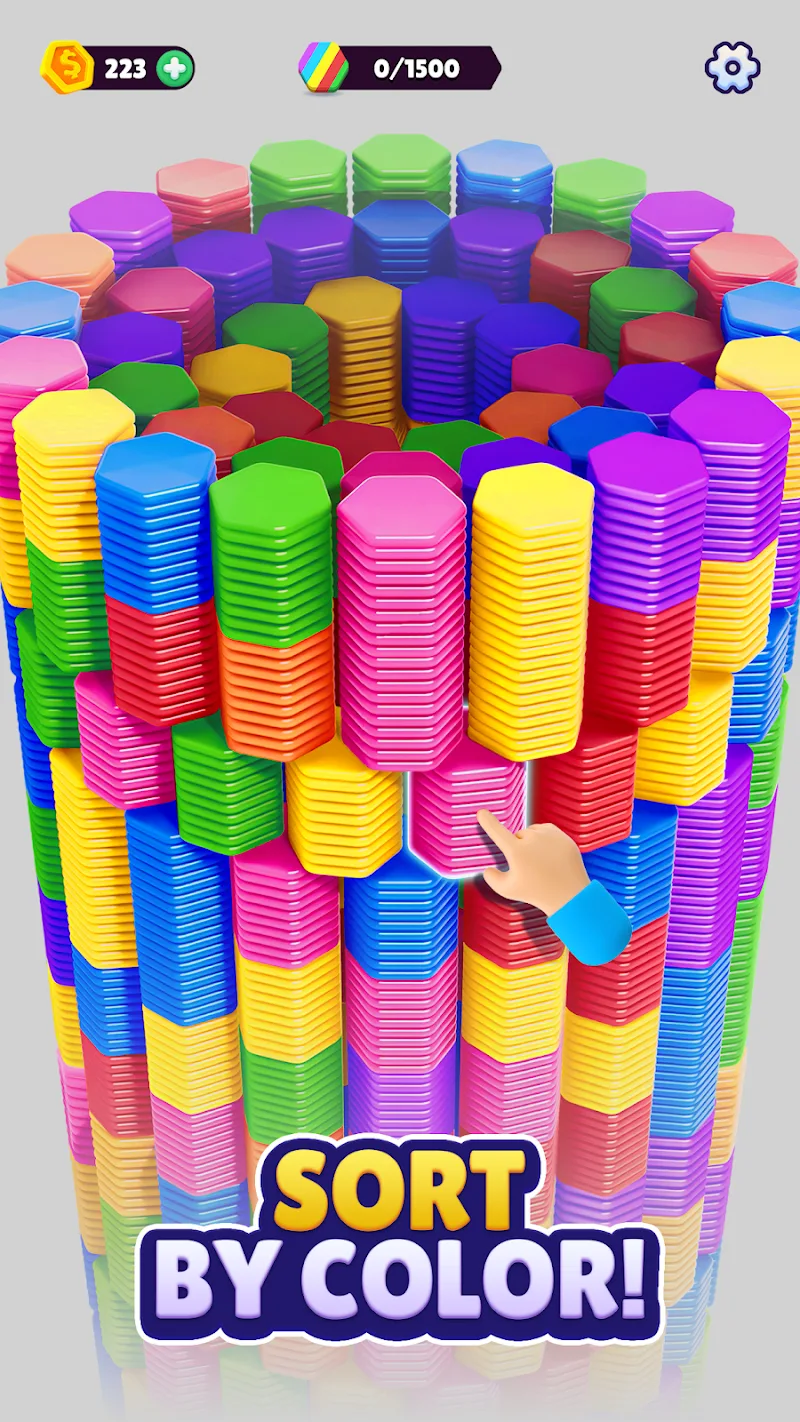
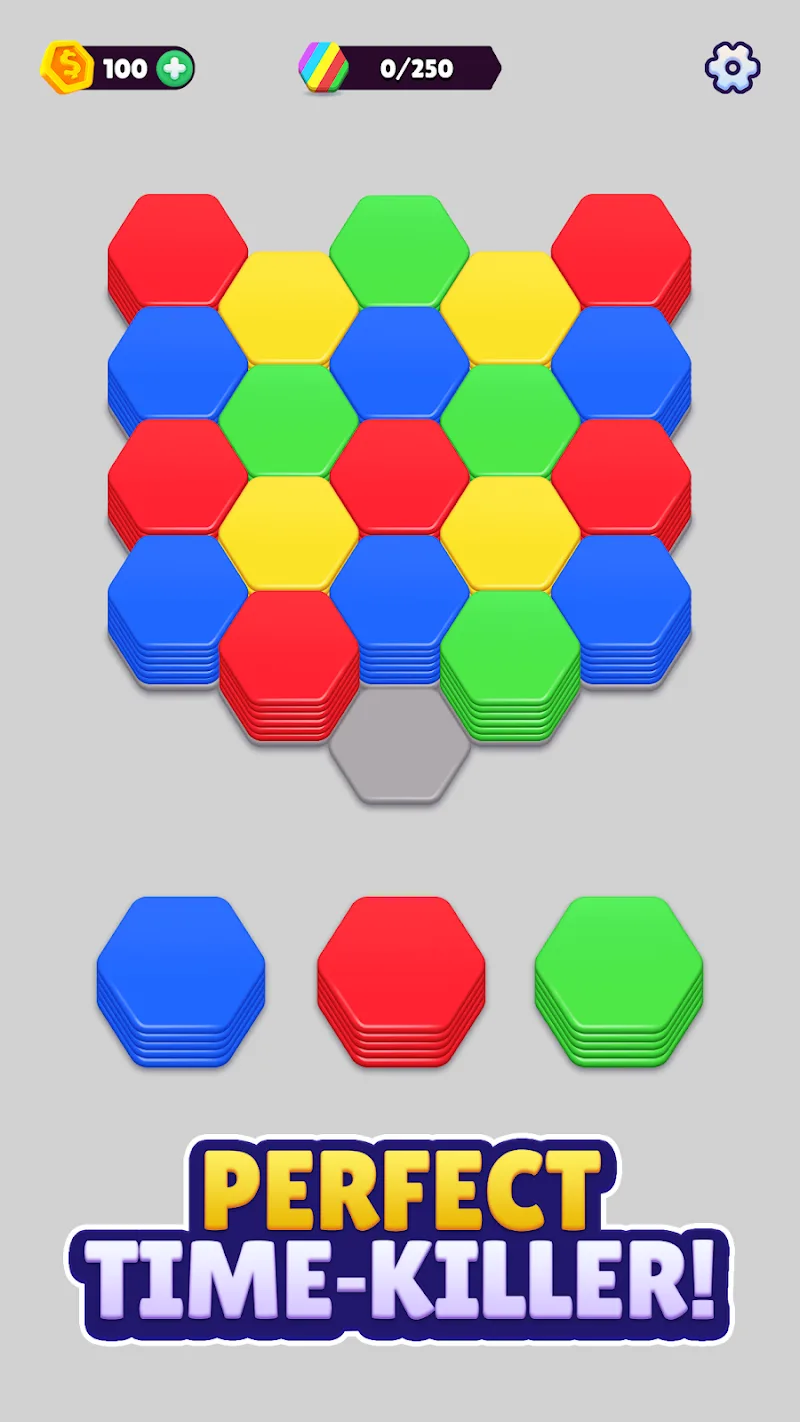
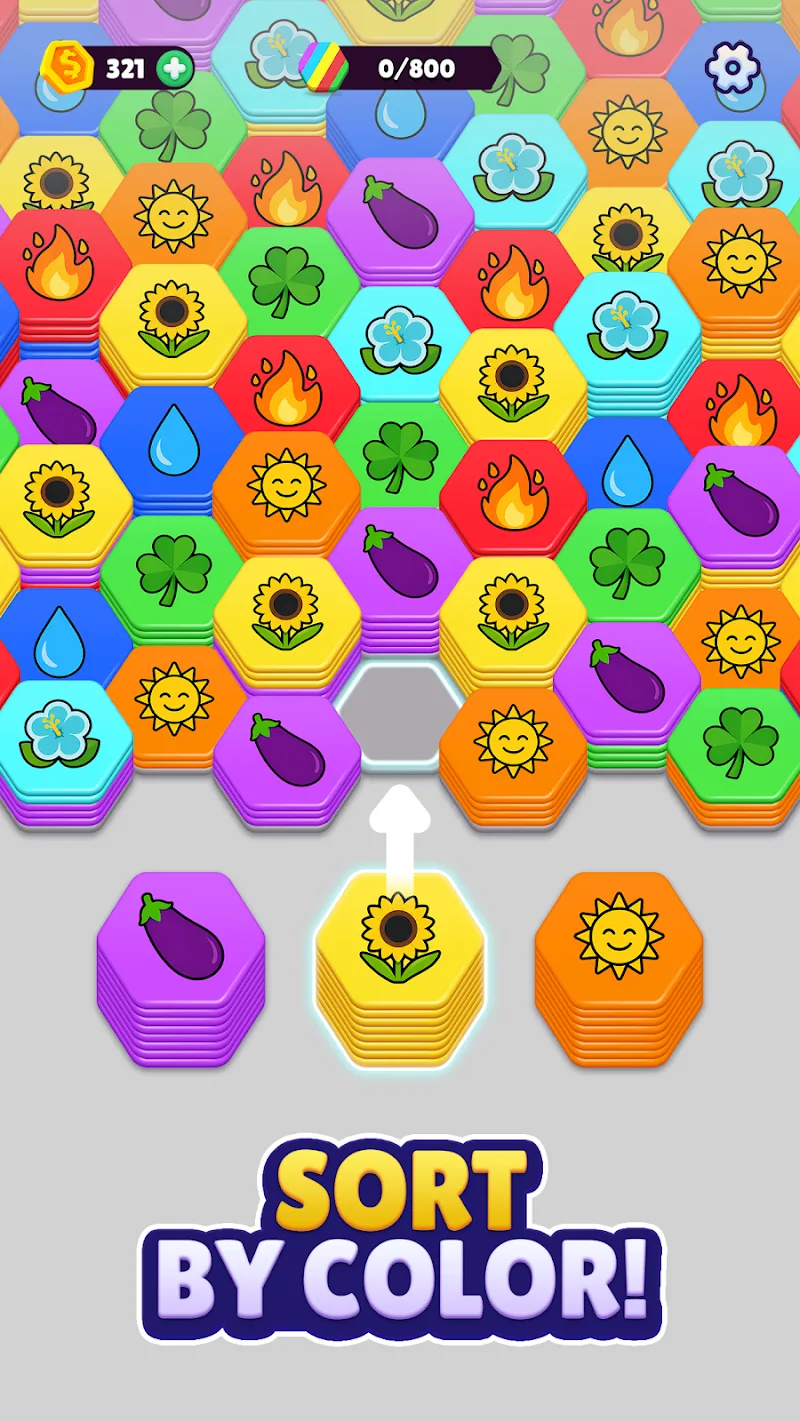
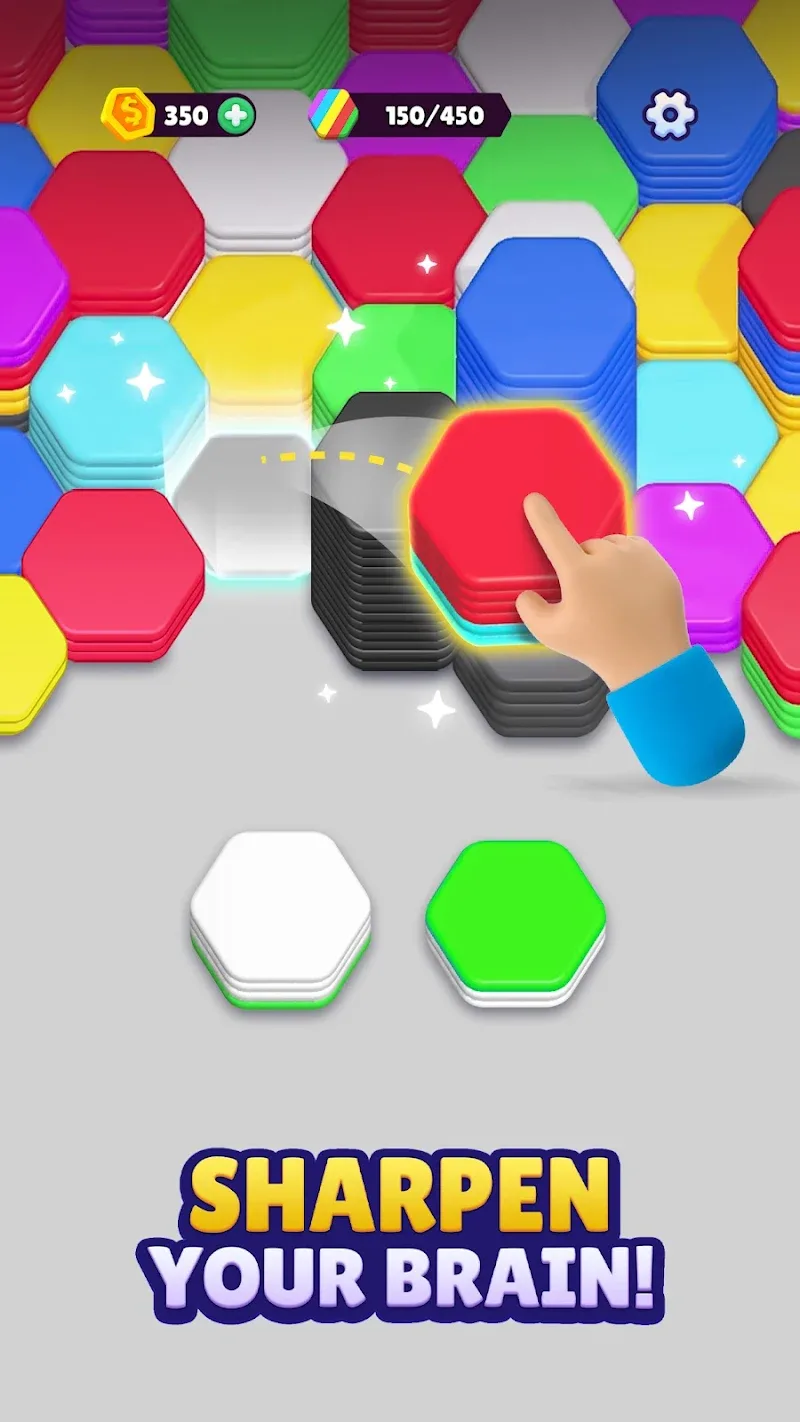
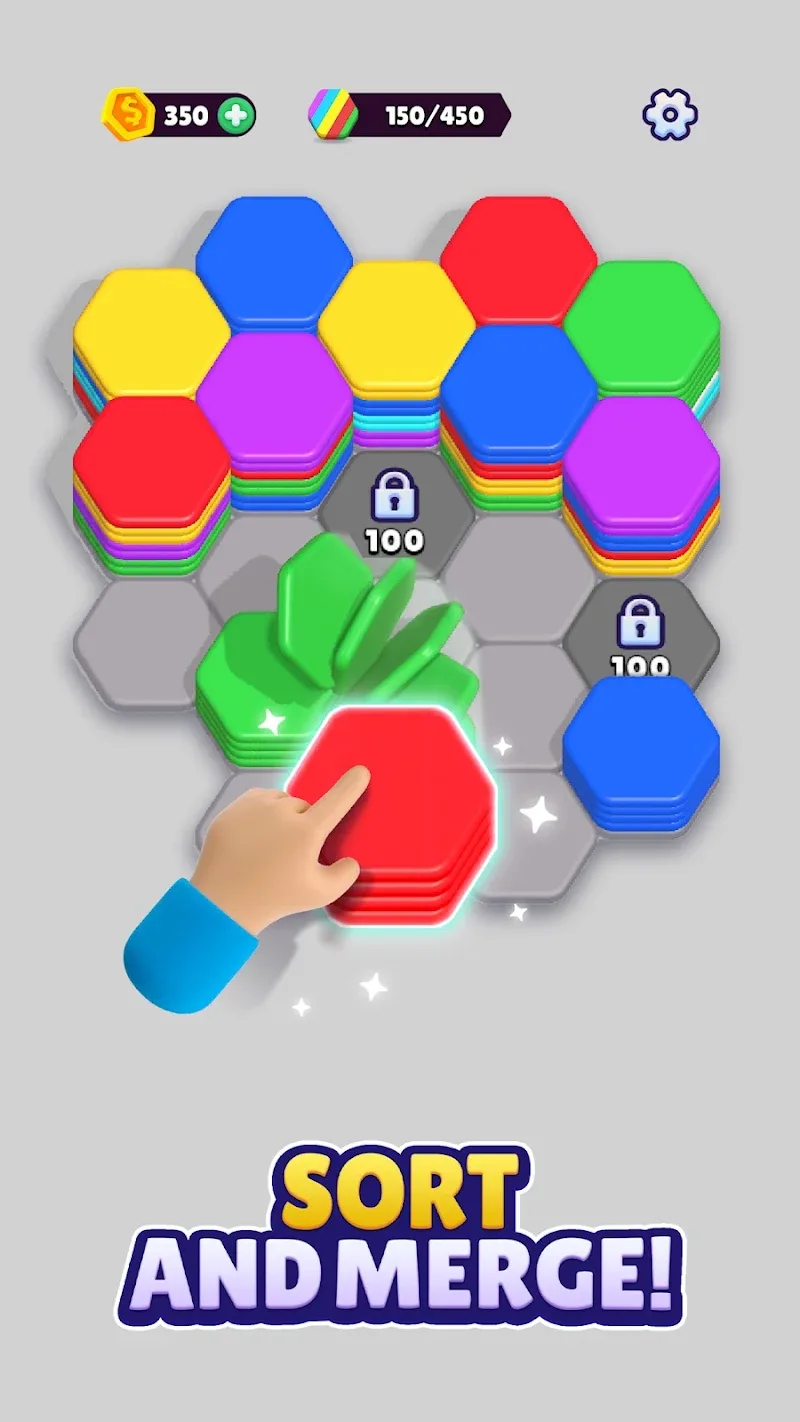
Hexa Sort is an Android color-sorting puzzle from Lion Studios Plus. You drag stacks of hexagonal tiles onto open spaces on a honeycomb board. When neighboring stacks show the same color on top, the matching tiles slide together automatically. One placement can gather a few tiles, clear a whole layer, or uncover a color that starts another merge. The move you make is simple. Where you make it determines how much room you’ll have for the next stack.
Read the Stack From the Top Down
The top color tells you where a stack can merge right away. Say you’re holding a stack with blue tiles over yellow ones. Place it beside a blue-topped stack and the blue tiles can join up. If that exposes the yellow layer next to another yellow-topped stack, the same move can set off a second merge. Before you drop a stack, look at what could become its new top and which neighbors that color would touch.
When enough tiles of the same color gather at the top of one stack, that layer clears. Any tiles underneath stay in place. A cleared layer gives you progress toward the goal, but it only opens that particular cell if the stack is gone. On a crowded board, that difference can determine whether you have room to place the next stack beside the color it needs.
Leave Room Beside the Stacks You’re Building
An empty cell next to a tall stack gives you somewhere to add its matching color. Fill that spot with a stack that can’t merge and you may have to wait for another opening. When you have several stacks to place, start with one that can move tiles around immediately. It may uncover a match for a stack you were about to leave on its own.
Each level has a collection goal, with a progress bar showing how close you are. When the board is still open, you have room to set up a chain. Once it gets tight, a move that frees a cell can be worth more than one that simply makes a tall stack taller.
Use Boosters to Open Up a Crowded Board
The Hammer breaks a stack to free up its space. Replace swaps two stacks, which can put matching colors side by side and trigger a merge. If two useful stacks are boxed in on opposite sides of the board, check what each one would touch after a swap. You might get the match you were waiting for and expose another color in the process.
Clearing a level also adds pieces toward a shape that is revealed once the collection is complete. It gives those individual boards a shared goal, even when one level ends with a single clear and the next ends in a chain.










Comments (0)
No comments yet. Be the first!