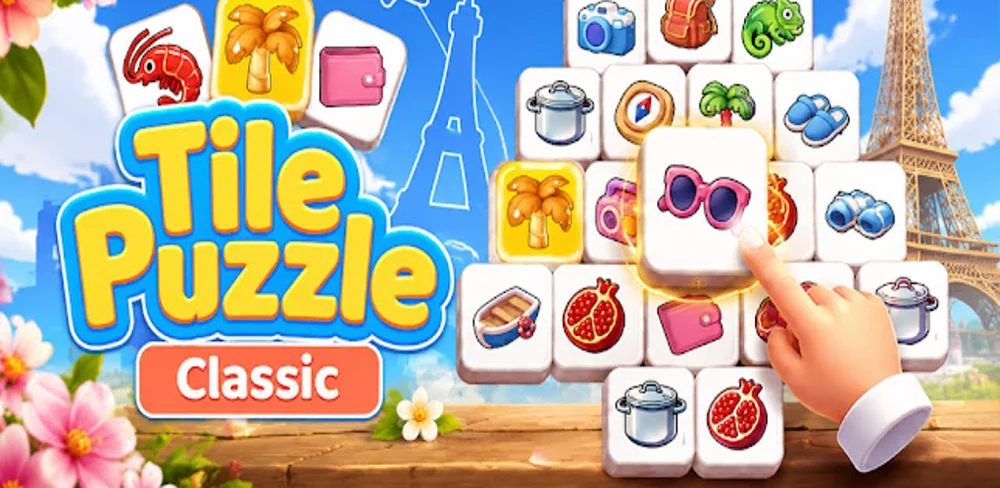

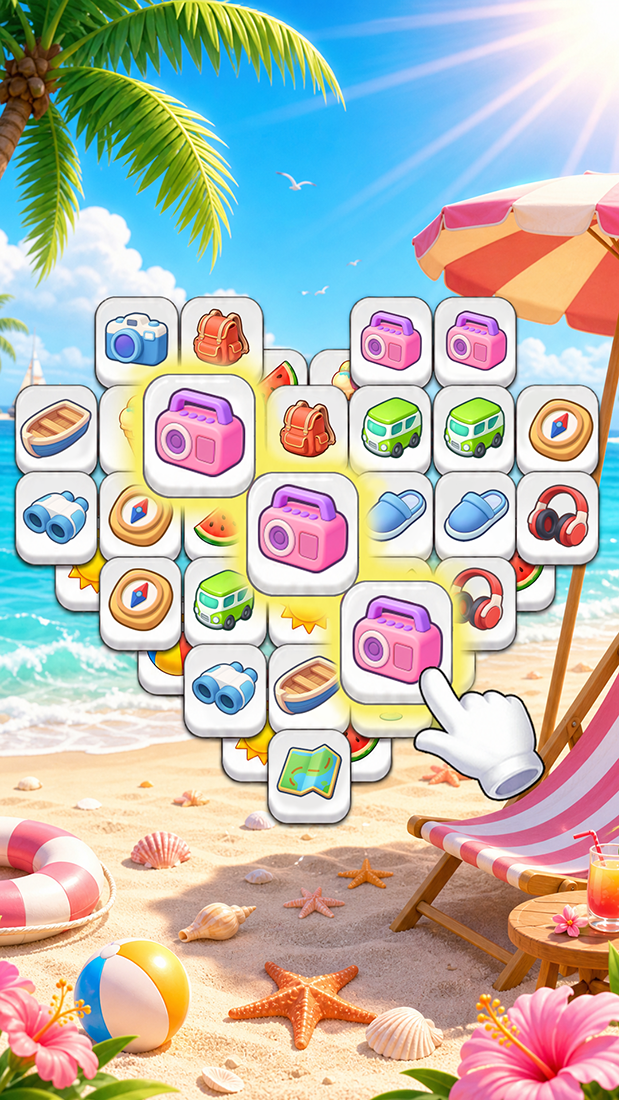
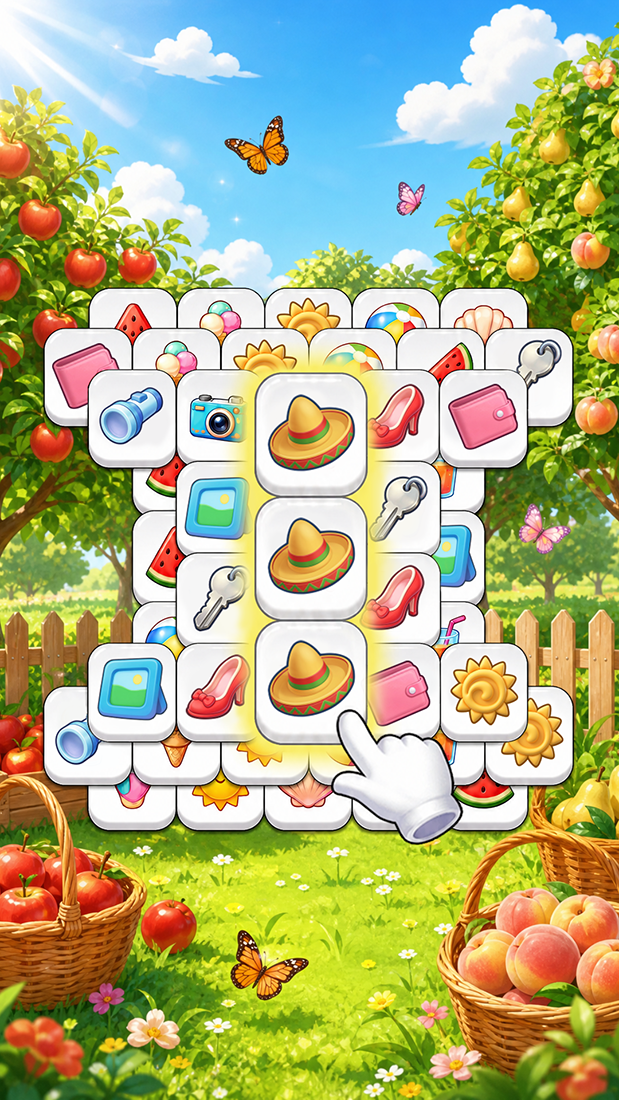
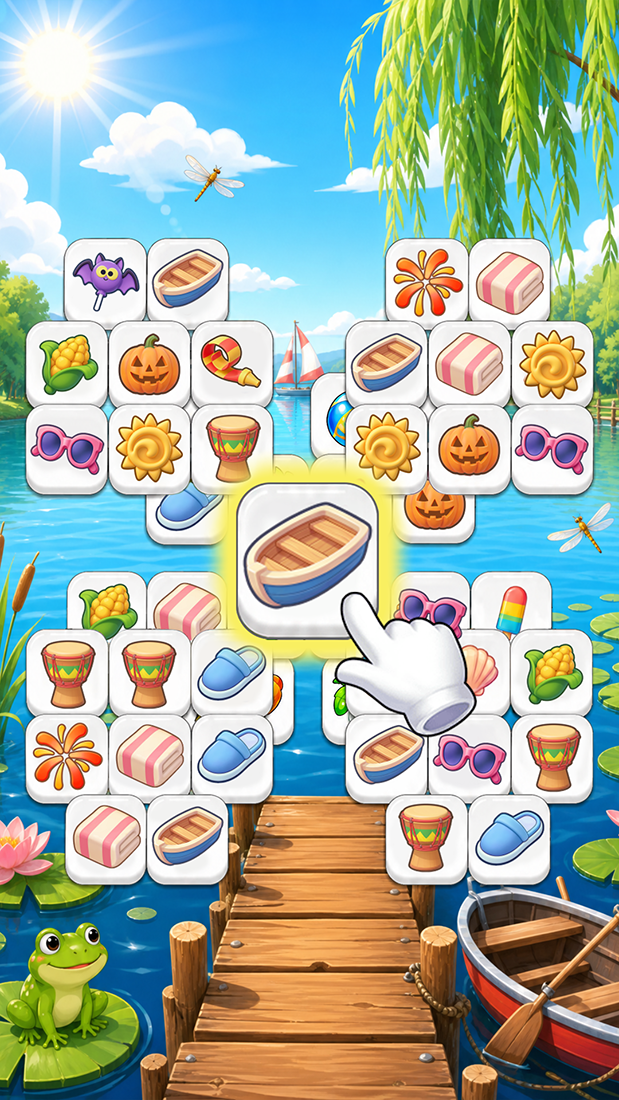
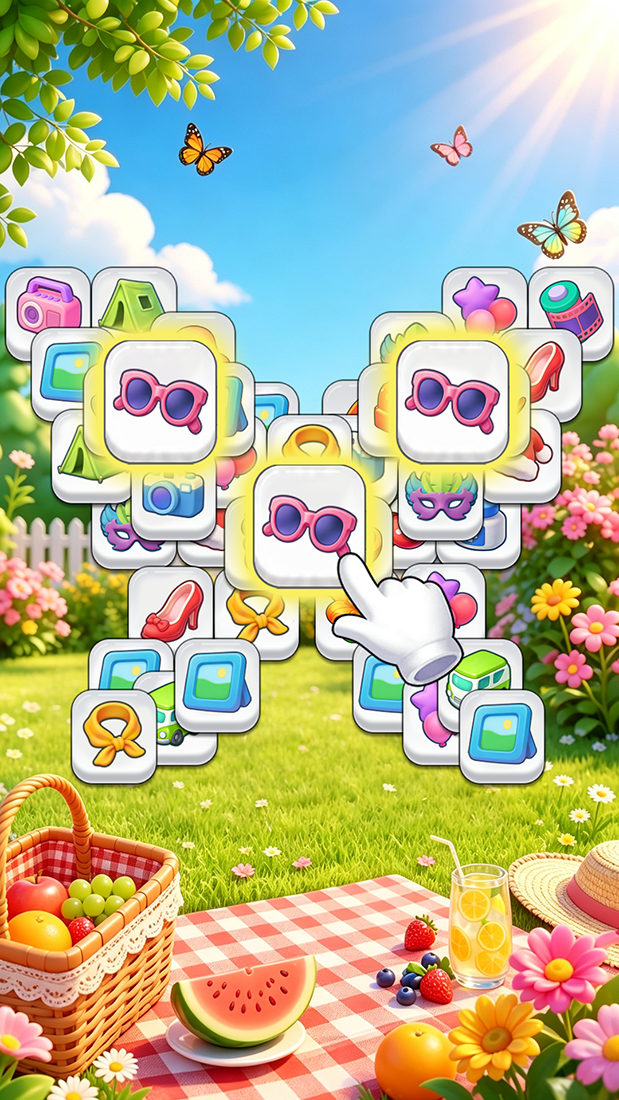
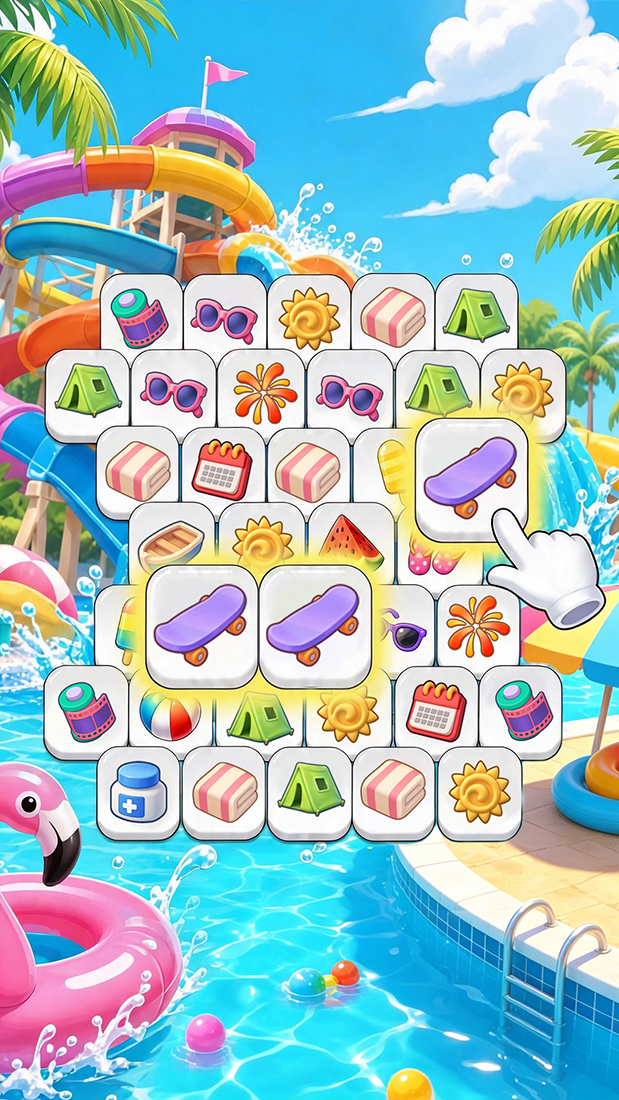
Tile Puzzle Classic is a single-player match-3 puzzle game built around a straightforward loop: read the board, spot a useful match, and clear tiles while the level’s demands become more involved. It does not need a sprawling story to establish a direction. The changing puzzle layouts are the point, and each completed board leads directly to another arrangement that asks for a slightly different approach.
The game frames its levels with stylized scenery, including snowy mountains and flowing rivers. Those backgrounds do not alter the basic matching rules, but they keep the setting from feeling fixed while players work through a large level catalogue. It is a familiar puzzle format, presented as a series of compact boards rather than an open-ended simulation.
Matching Starts Simple, Then Needs More Care
The early appeal of a match-3 game is clarity: look for compatible tiles and act on the obvious opportunity. Tile Puzzle Classic keeps that accessible starting point, while later stages are described as requiring more observation and strategy. A board that initially looks like a quick clear can ask you to pause and consider which match will leave the next useful option available.
That shift gives each level a practical rhythm. First identify what can be matched now, then avoid using a move that leaves the board less flexible. The task is not about speed alone. It is about noticing the arrangement in front of you and deciding which small action makes the rest of the puzzle easier to read.
A Large Level List Changes the Routine
The game is presented as having thousands of levels, ranging from lighter mini-games to more complex puzzle challenges. The useful part of that range is choice of pace. A brief session can mean working through a board or two, while a longer one can be a run of increasingly involved layouts.
New tile levels were included in the latest update notes, so the catalogue is still being expanded. That matters more here than in a puzzle built around one fixed campaign. New boards are the main kind of content, and a fresh layout is enough to change the question the player needs to solve.
What to Know Before Settling In
The Android release is listed as playable offline, which suits a game designed around self-contained levels. It also contains ads and in-app purchases, so those are part of the package to consider before making it a regular puzzle break.
It makes the most sense when you want a traditional tile-matching routine with a steady supply of distinct boards. The best fit is not a player looking for a complicated progression system, but someone who enjoys scanning a layout, making a measured match, and seeing the next level present a fresh arrangement.
















Comments (0)
No comments yet. Be the first!