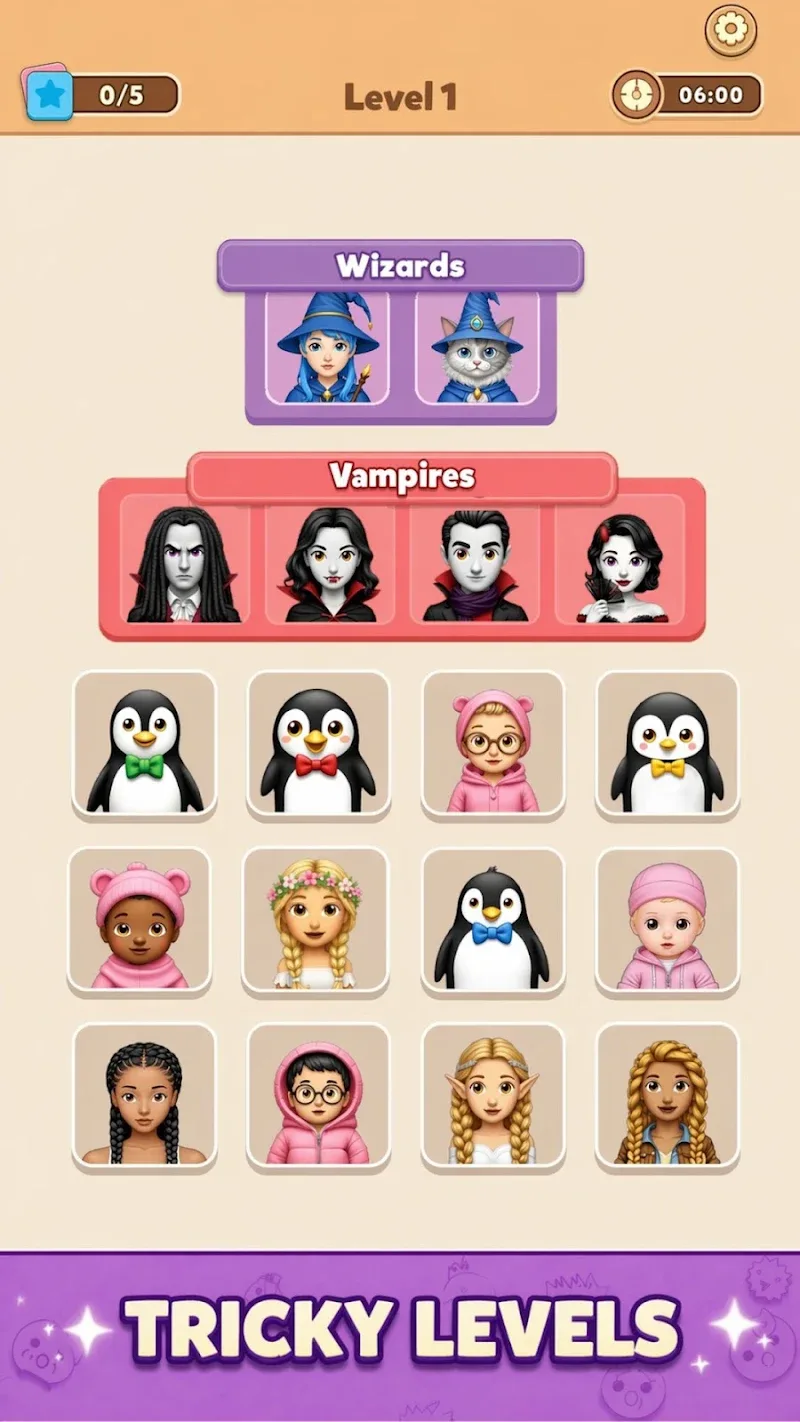
Connect Master is a visual matching puzzle game from Rooftop Game where the challenge is figuring out why pictures belong together. You tap and swap cards to arrange groups of four that share a trait, such as matching hair, glasses, clothing, or expressions. A board full of different faces becomes a search for a common detail, with each completed row putting your interpretation to the test.
Find the Connection Before You Swap
The main puzzle starts with observation. Scan the cards, decide which feature might link a group, and move the relevant pictures into the same row. Knowing how to swap is straightforward; deciding what deserves to sit together is where the thinking happens.
A useful approach is to choose one possible trait and check it across the whole board. If glasses catch your attention, look for the other cards that fit before rearranging everything. That gives each move a reason and helps you avoid chasing whichever similarity happens to stand out next.
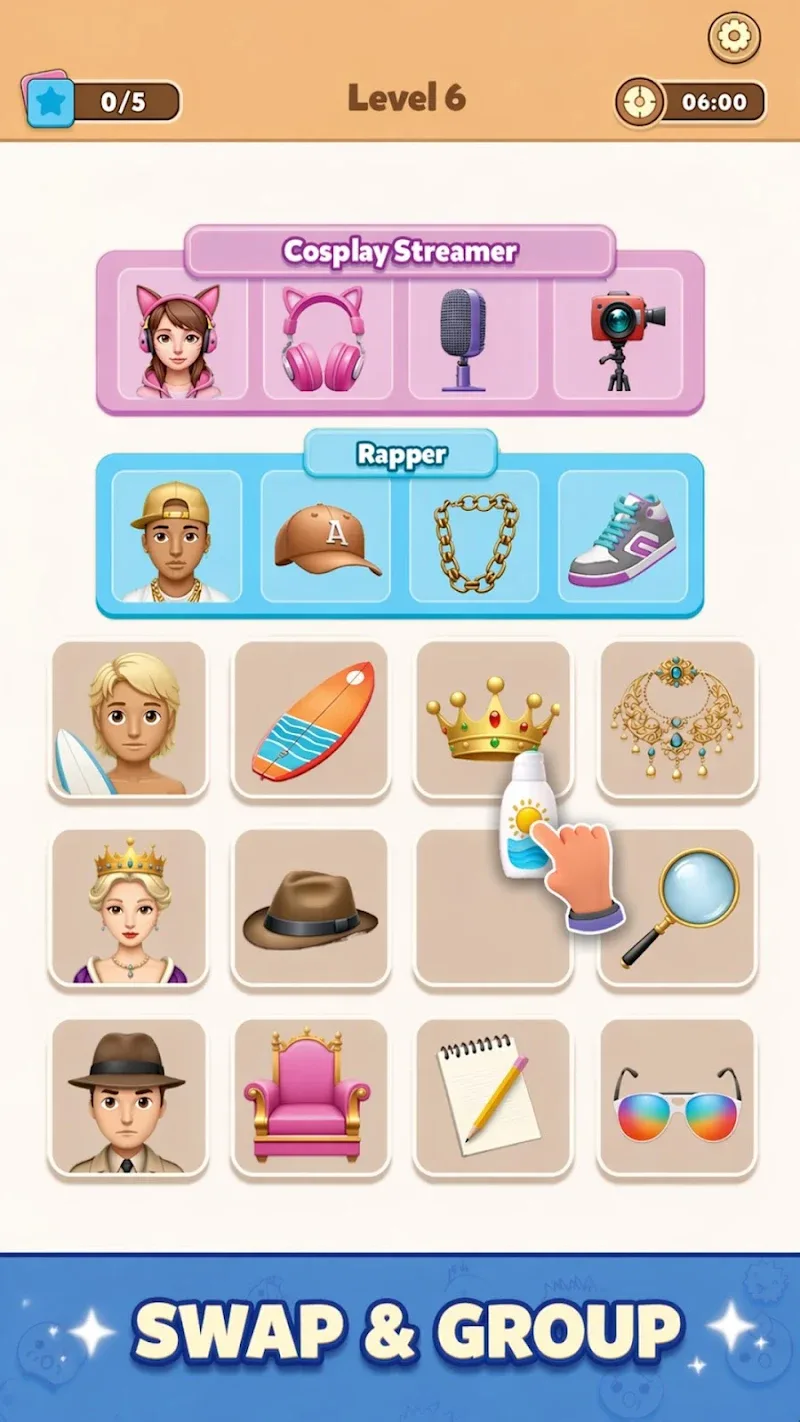
The pictures also extend beyond faces. A princess-themed group shown in the game combines a character with related accessories, including a crown and jewelry. Here, the connection comes from what the objects represent together. You’ll sometimes need to think about a theme as well as a shared physical detail.
When a connection refuses to come together, the Hint feature reveals two related cards. That supplies a starting point while leaving you to identify the relationship and locate the rest of the group. Comparing that pair closely is more useful than immediately moving unrelated tiles around.
Different Boards Change the Question
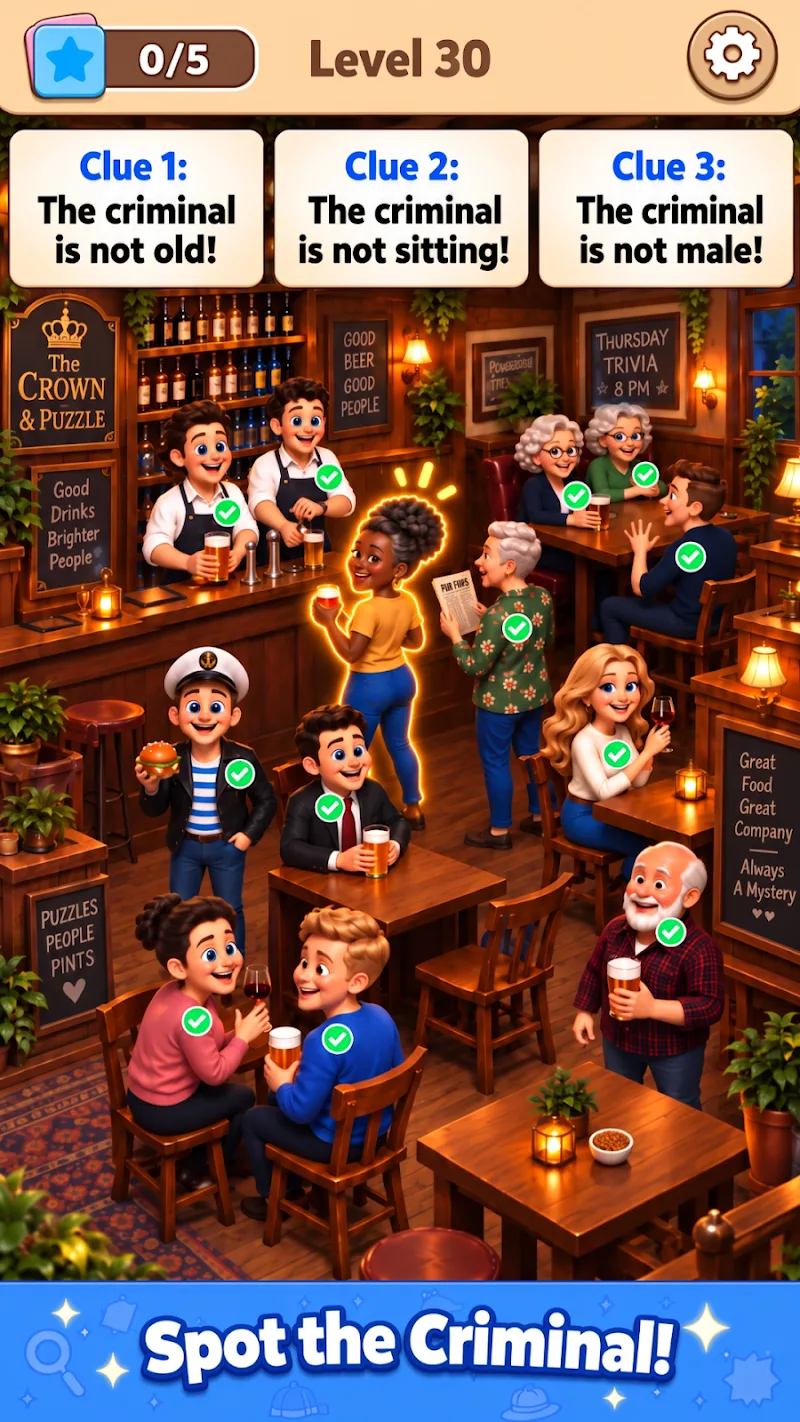
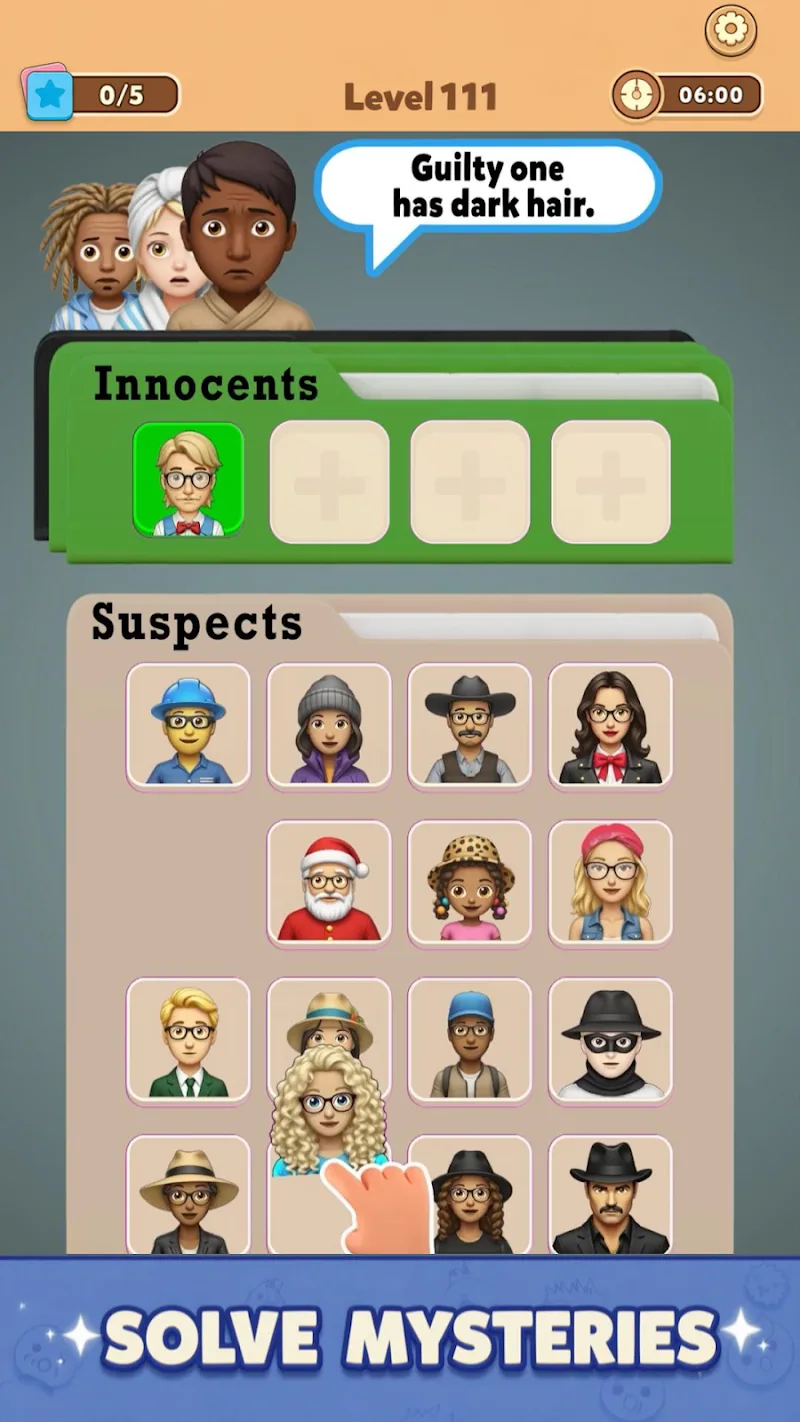
Connect Master includes special story levels, and its puzzle examples show several ways of working with visual information. One mystery board separates suspects from innocents using a clue about the culprit’s hair. Another places characters around a tavern beneath several clues, turning attention toward the people within a larger scene.
These setups give observation a specific purpose. Instead of simply finding a matching set, you’re using a detail to decide who fits a description and who can be ruled out.
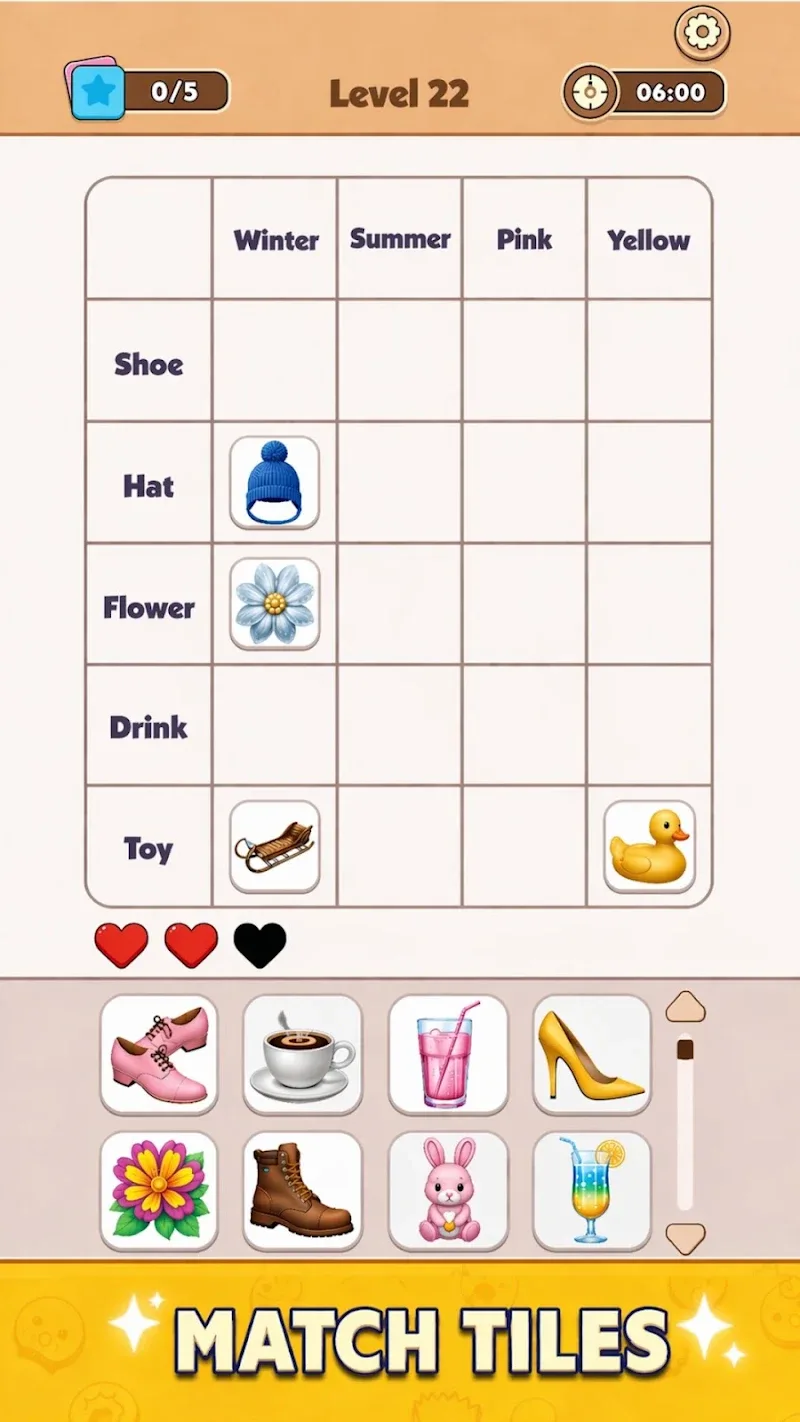
A category-grid puzzle takes another approach. Rows identify objects such as shoes, hats, flowers, drinks, and toys, while columns use labels including winter, summer, pink, and yellow. Placing a picture means considering both labels at its destination. A pink drink needs to satisfy the object category and the color category together.
That variety gives the artwork a practical role. Faces, accessories, and everyday objects are the information you need to read, so small differences deserve attention even when the overall presentation looks playful.
Clues, Clocks, and Careful Swaps
The game includes advertisements and in-app purchases. Its puzzle screens also show timers, so don’t assume every challenge lets you study the board indefinitely. Reading the rule before making a string of swaps is a sensible habit.
The appeal rests on spotting a relationship you initially overlooked. Before using a hint, try describing the remaining pictures in a different way: their expression, clothing, color, or purpose. A board that looks mismatched at first may become much clearer once you find the right category.










Comments (0)
No comments yet. Be the first!