
Brain Puzzle 3: Crazy Mind turns messy rooms, awkward encounters, and cartoon emergencies into short interactive puzzles. This Android game from JoyGame Studio asks you to inspect each scene, work out what the situation needs, and use the objects around its characters. Some answers follow everyday logic. Others depend on accepting a much stranger use for something sitting in plain sight.
Look Beyond the Obvious Object
Tapping and dragging are central to solving these scenes. An object may need to move onto a character, a container may hide something useful, or part of the background may turn out to be involved. Looking carefully matters, but so does trying an interaction that initially seems unlikely.
The cowboy challenge gives a good example of that approach. You can move a hat and glasses onto the main character, open a bag to find a pistol, and interact with a nearby music player. Completing the scene takes several small actions, so finding one useful item doesn’t necessarily finish the job.
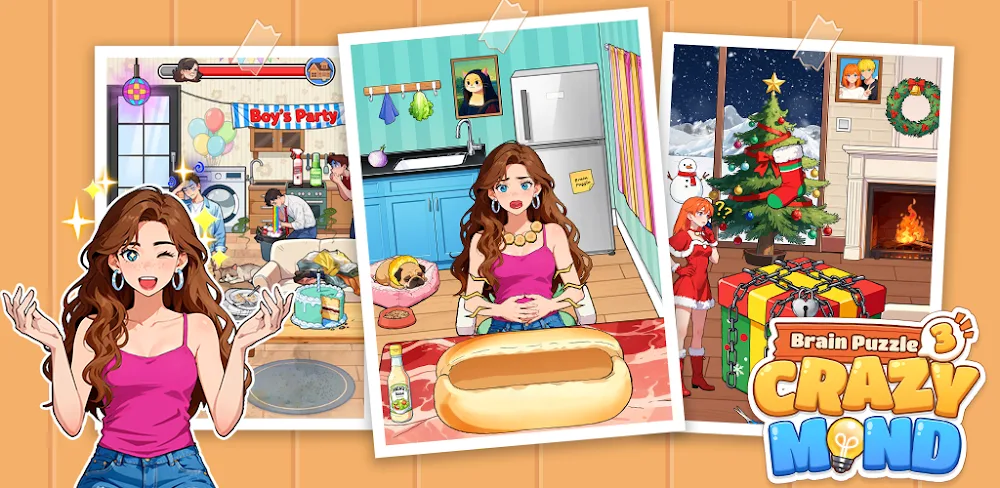
Then there’s a hot dog puzzle that pulls potential ingredients from decidedly unusual places, including a curtain and a note attached to a fridge. It’s an early indication of the game’s comic rules: an object’s normal purpose won’t always tell you how the puzzle expects you to use it.
That makes experimentation part of the appeal. If you enjoy noticing a visual joke and testing whether it actually works, there’s a clear reason to explore the screen. Players who want every answer to follow strict real-world logic may find those leaps harder to enjoy.
Cluttered Scenes with a Comic Payoff
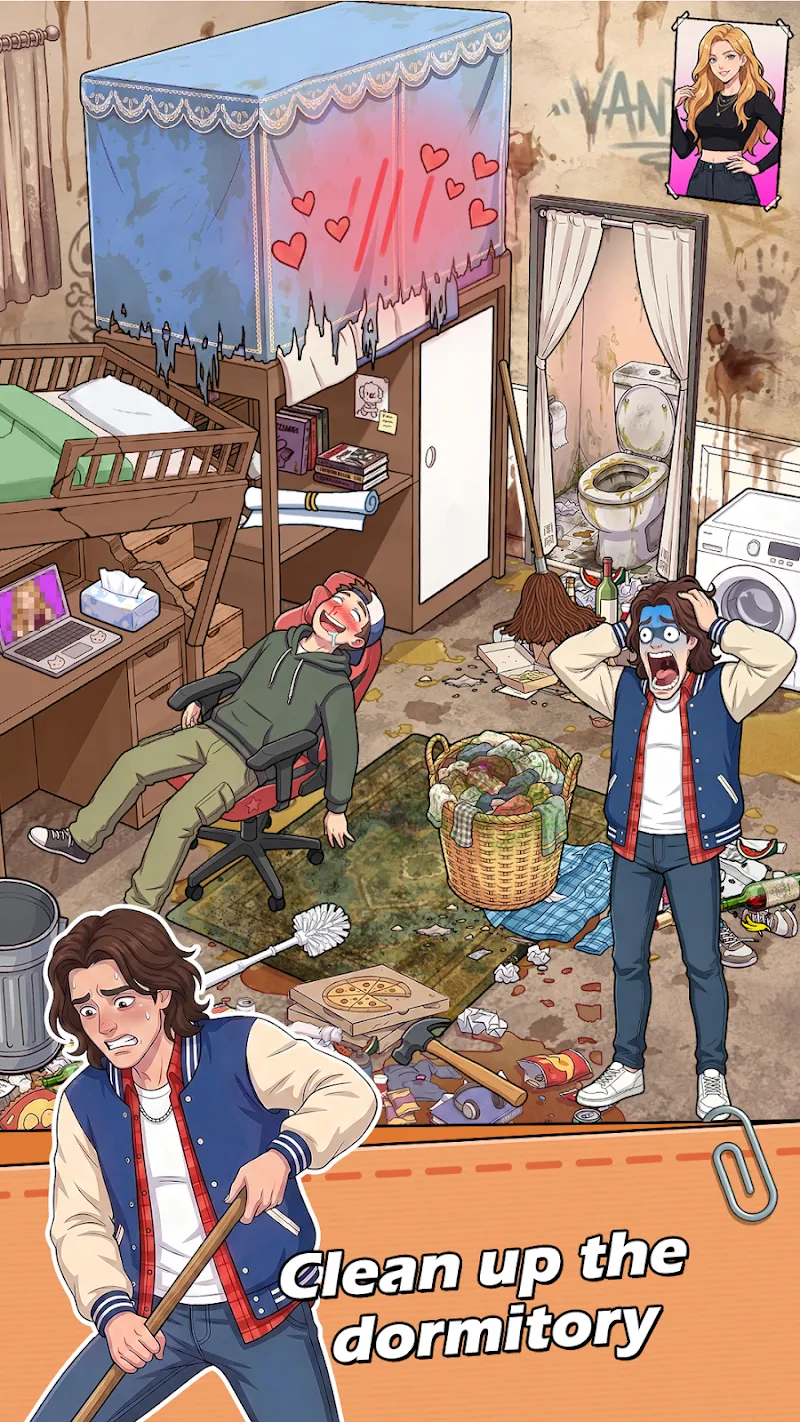
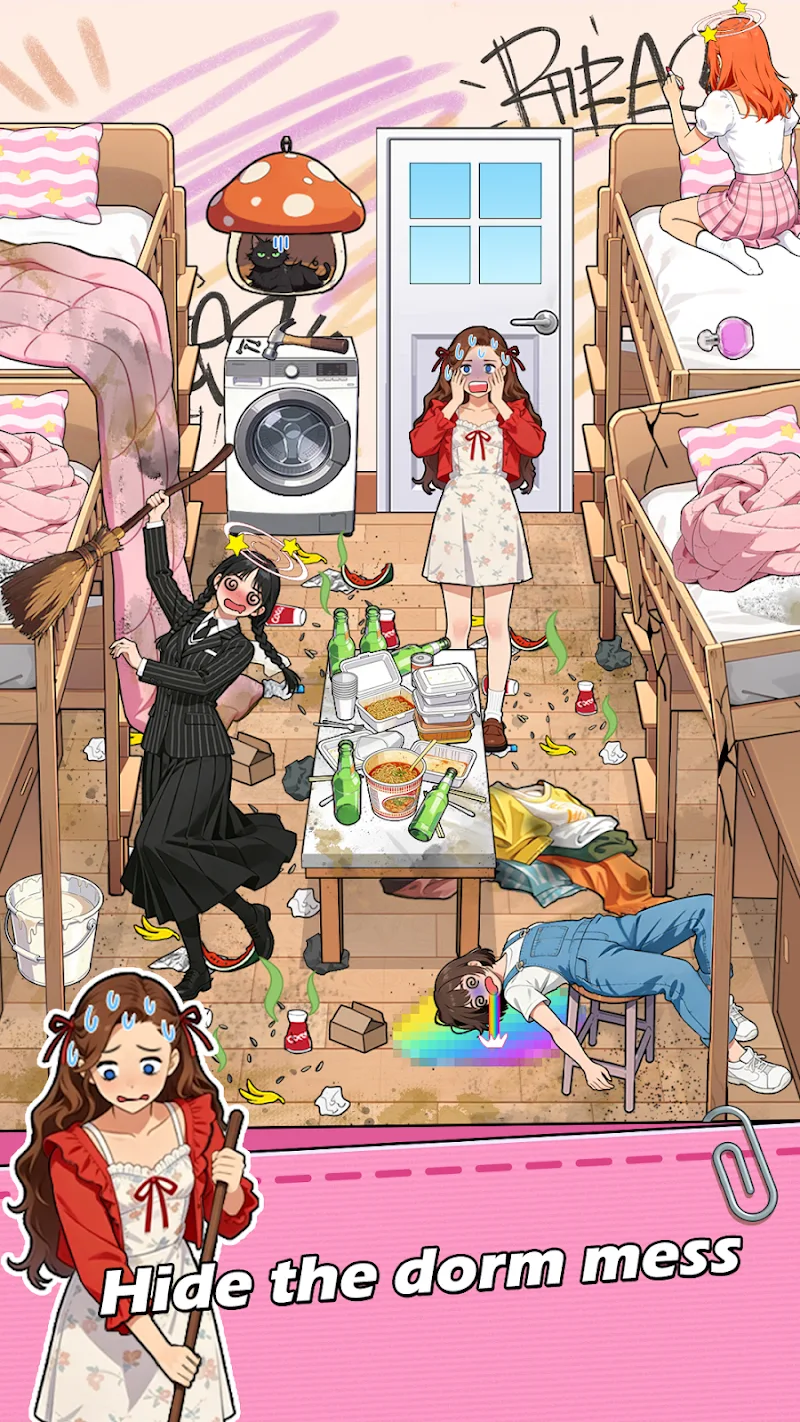
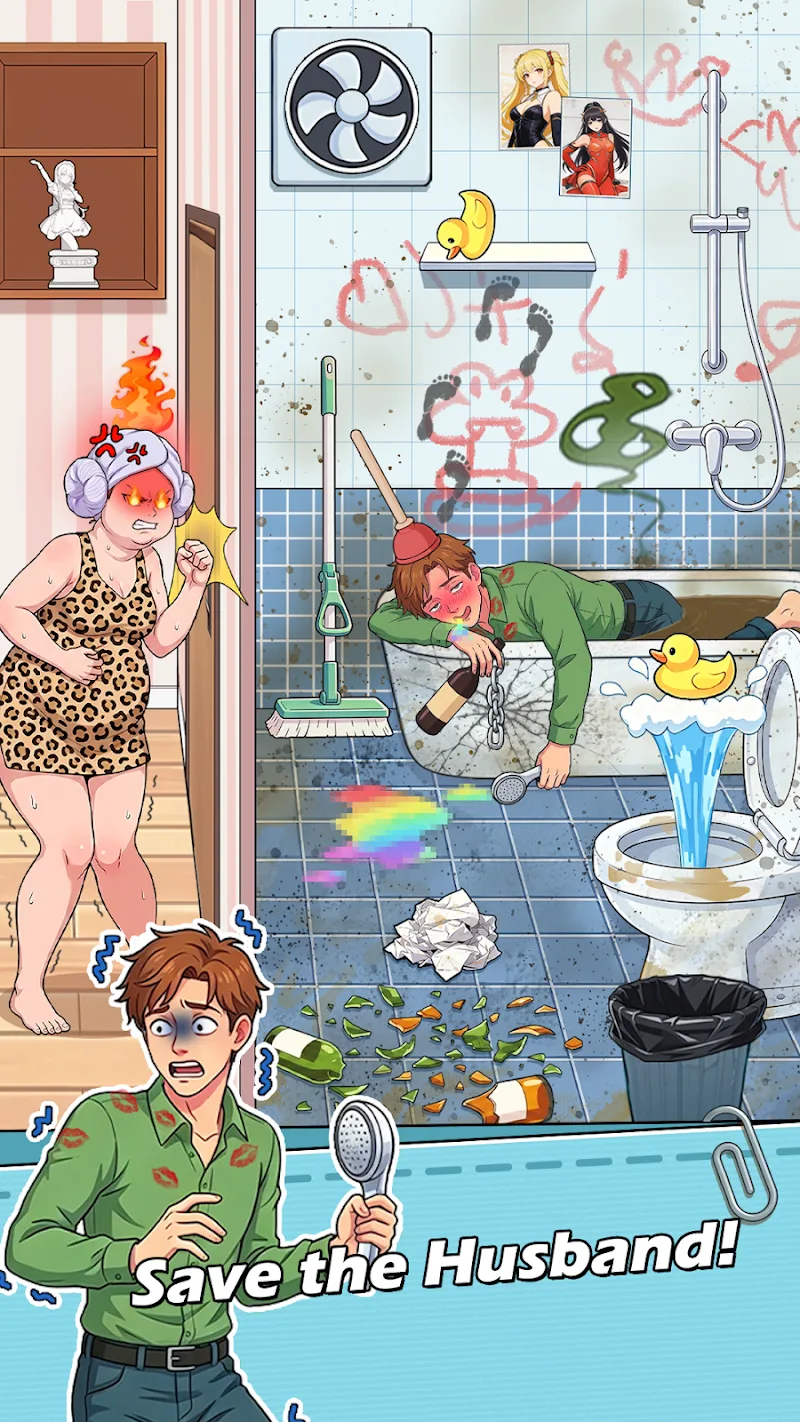
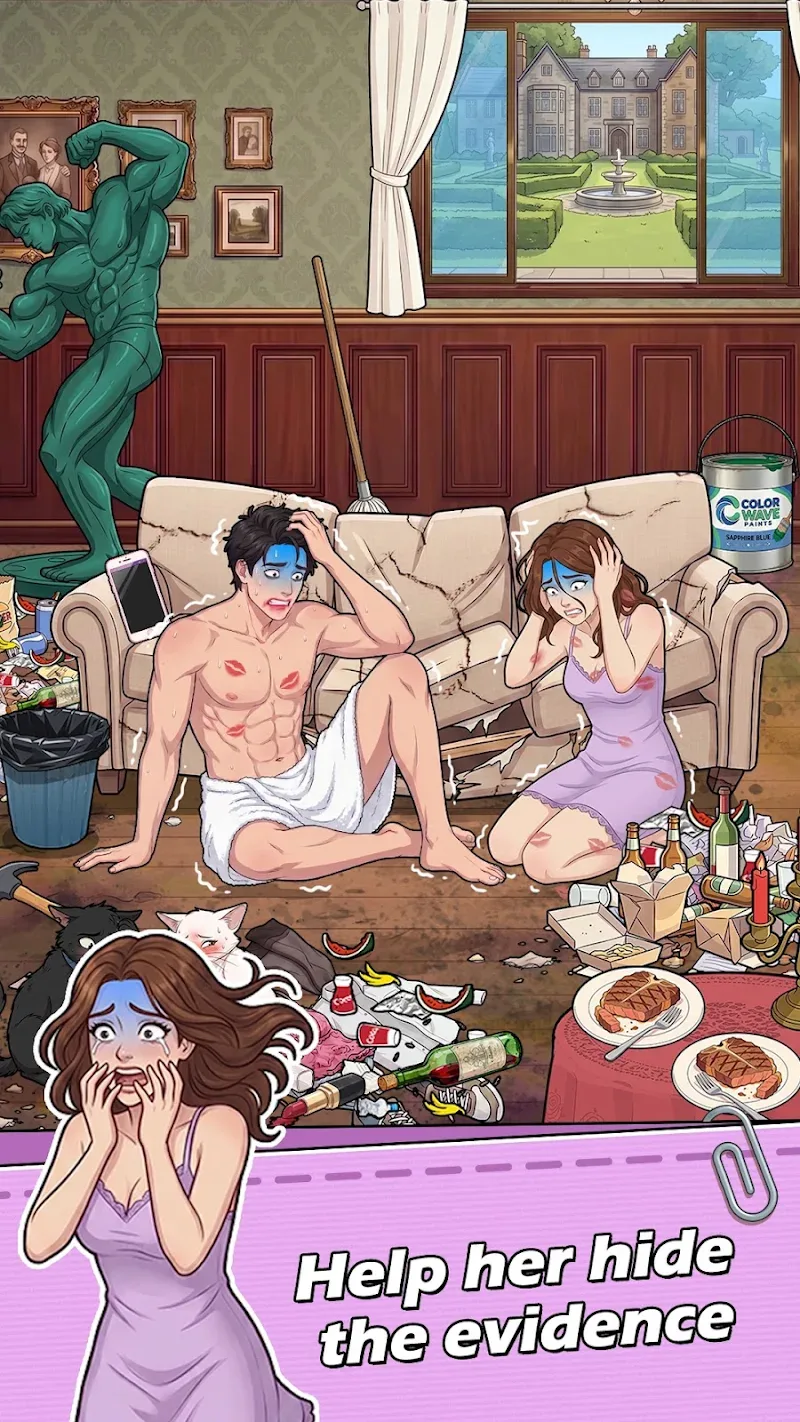
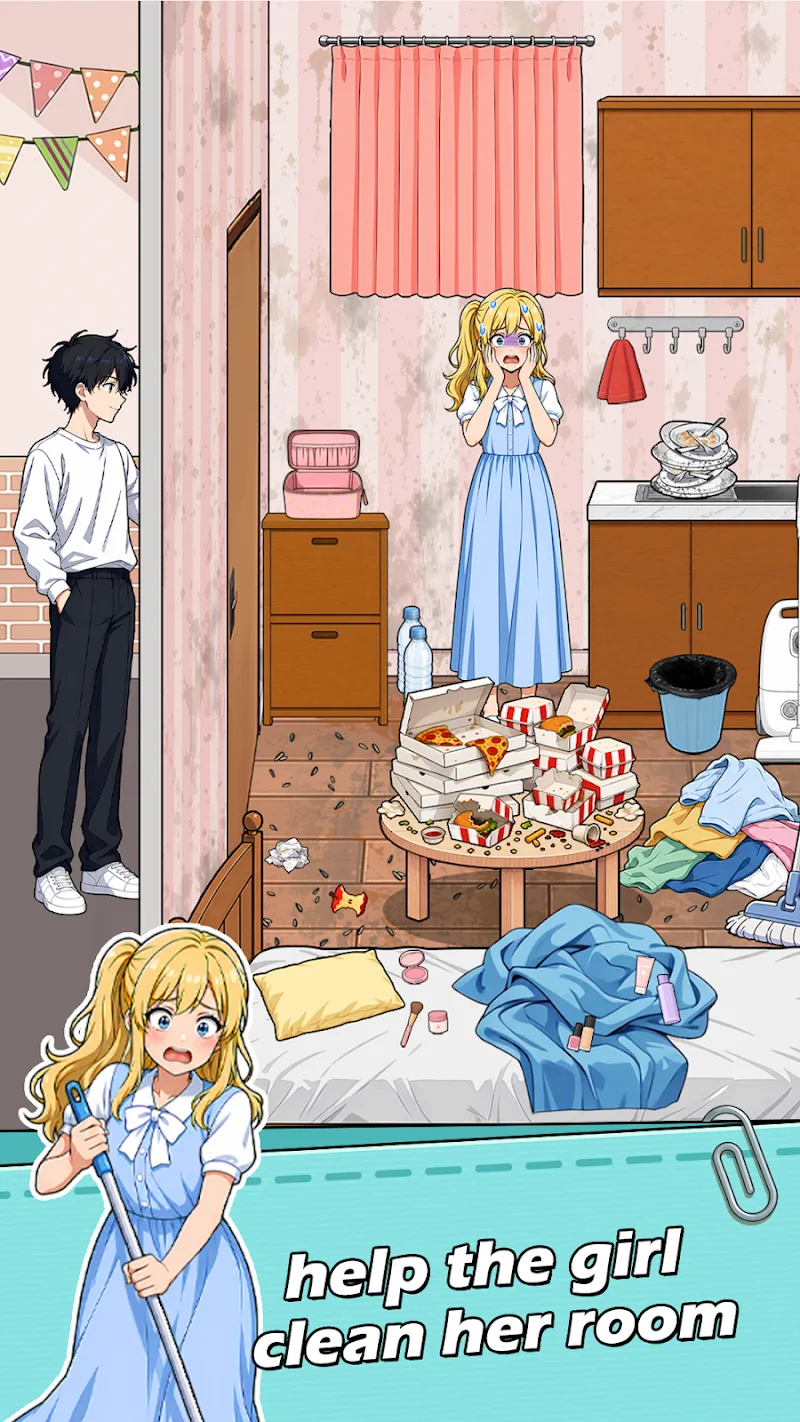
The illustrations do much of the storytelling. Dormitories are crowded with clothes, food, furniture, and scattered belongings; bathroom scenes turn ordinary household trouble into exaggerated predicaments. Large facial expressions make the characters’ discomfort or surprise easy to read.
Tasks include cleaning a dormitory, hiding a mess, helping a girl tidy her room, and concealing evidence in an awkward domestic scene. Those goals give the clutter a purpose. You’re looking across an environment for things that might help change the situation, with the characters providing context for what needs fixing.
The variety also changes what you pay attention to. A cleanup request encourages a search for misplaced objects, while a concealment task asks you to consider what someone else might notice. Similar-looking rooms can therefore pose different questions without requiring a complicated set of controls.
Short Puzzles, Unexpected Answers
The collection combines observation and logic challenges with creative solutions and quick-thinking tests. Its short stages suit breaks when you want a specific problem to work through, though an unusual answer can still take some experimentation.
Advertisements and in-app purchases are included. The cartoon presentation also comes with a Teen content rating covering violence, blood, suggestive themes, and alcohol references, so it shouldn’t be mistaken for a young children’s educational game.
Brain Puzzle 3: Crazy Mind makes its strongest case through the details tucked into each picture. Before giving up on a scene, look again at the background: something you dismissed as decoration may be the next thing worth moving.










Comments (0)
No comments yet. Be the first!