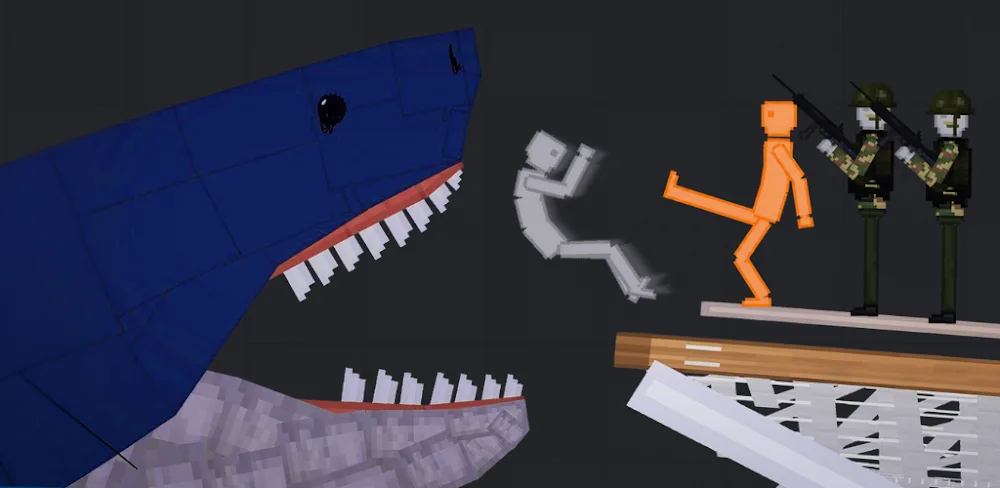

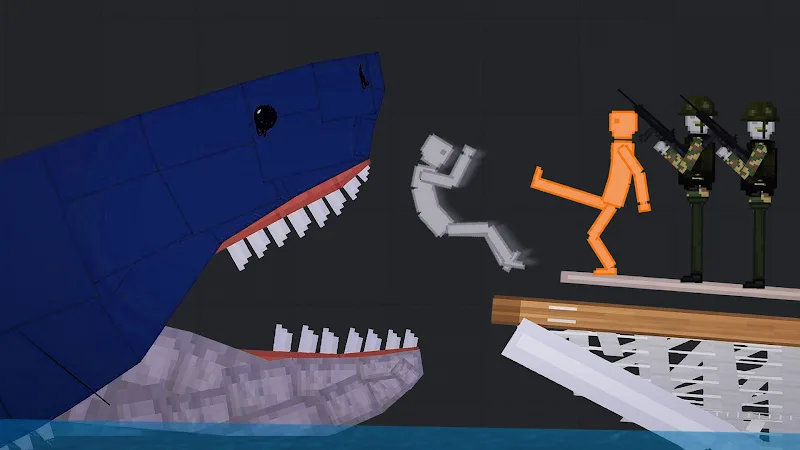
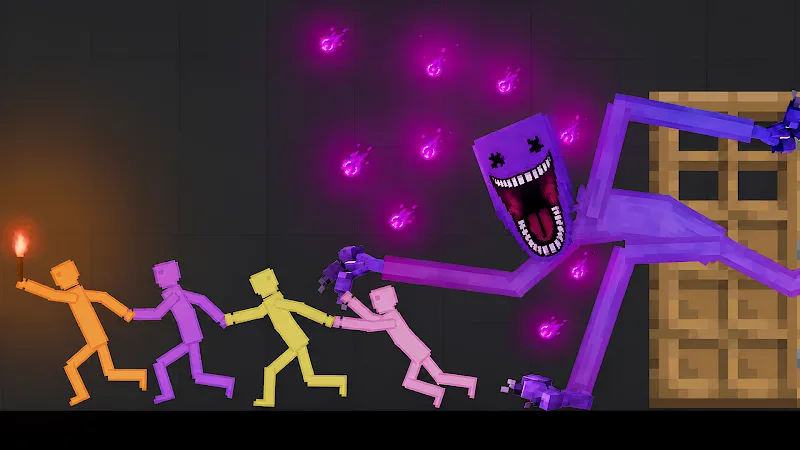
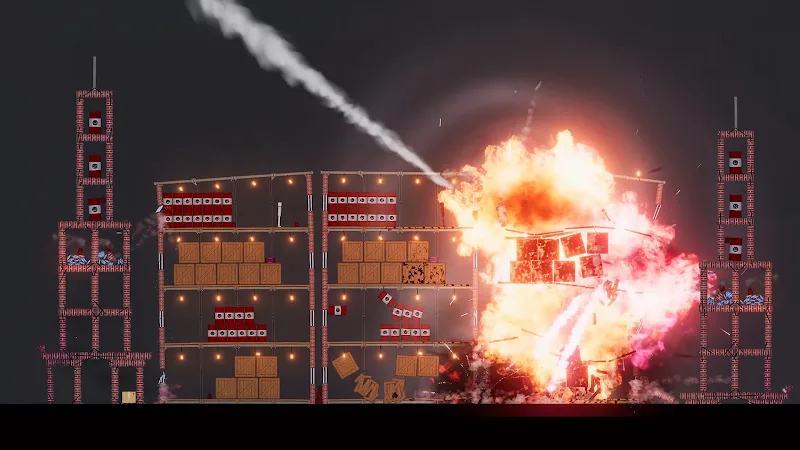
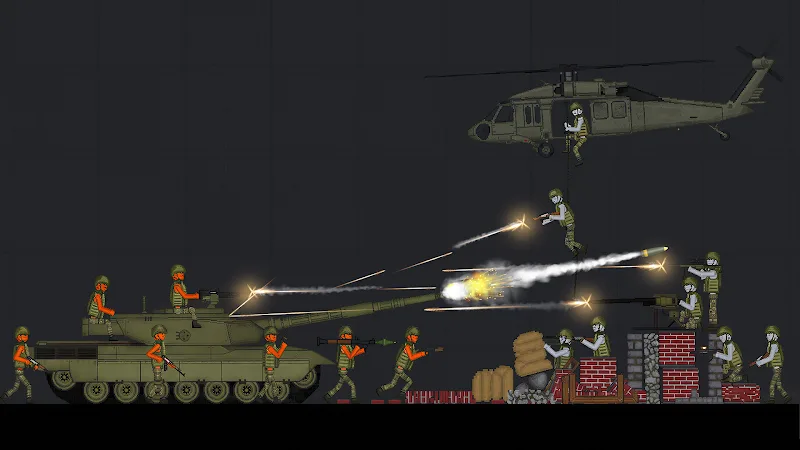
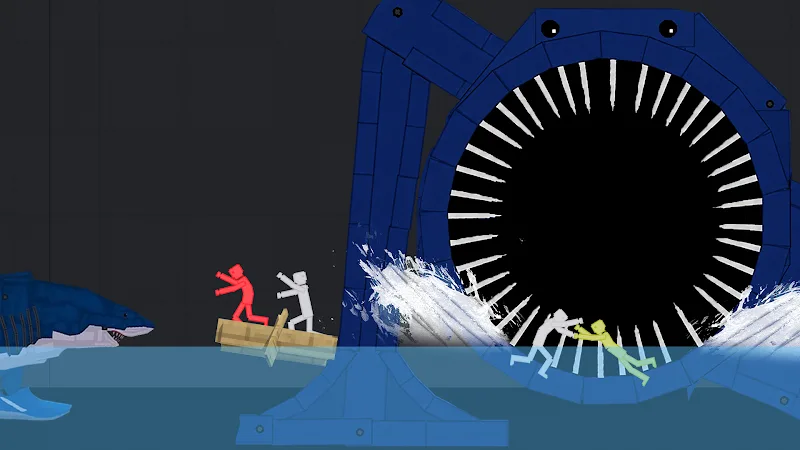
Ragdoll 3: Monster Playground is a physics-based sandbox game built around setting up situations and seeing what follows. Rather than pushing you through one fixed campaign path, it gives you ragdoll characters, monsters, tools, traps, and machines to combine inside a virtual play space. The point is not perfect execution. It is curiosity: place a few objects, trigger an interaction, then change the setup when the result takes an unexpected turn.
A Sandbox That Starts With an Idea
The central activity is making your own scenes. You can arrange simple tools or more elaborate devices, then use them to create collisions, falls, traps, and chain reactions around the characters. That open structure leaves room for a quick experiment as well as a more carefully planned contraption.
It also makes small adjustments meaningful. Moving one item or adding another part to a setup can alter the route of a collision and send a scene in a different direction. There is no single correct solution to chase in these moments. You decide whether the next attempt should be messier, more controlled, or built around a completely new idea.
Physics Gives Each Setup a Result
Ragdoll motion is the connective tissue between the game’s objects. Characters respond to impacts, falls, and traps, so a layout is not simply a static arrangement on screen. Once something is activated, the results can develop through the movement of the figures and the objects around them.
That gives the construction side a puzzle-like edge. A chain reaction needs the right sequence, and an obstacle may call for a different placement than the one you first had in mind. The game’s description frames these physics interactions as part of both free experimentation and challenge-oriented play, which is useful if you prefer a sandbox with more to do than decorate a scene.
Playground Mode Leaves the Rules Open
Playground Mode is the clearest expression of that freedom. It is an unstructured area for trying combinations of tools, monsters, and traps without a stated objective. You might use it to test how two items behave together, build a longer sequence of events, or keep revising a setup until it produces the sort of chaos you wanted.
Because the mode does not demand a prescribed outcome, it suits short sessions well. You can begin with one device and one character, then stop after an interesting interaction, or continue layering objects into a larger scene. The tone is deliberately cartoonish and includes mild violence, so the appeal depends on being comfortable with ragdoll mishaps as the game’s main subject.
Ragdoll 3: Monster Playground is best approached as a toy box with physics at its center. Players looking for open-ended building, traps, and unpredictable object interactions will have the most to explore; those after a tightly guided series of levels may find its lack of a fixed goal less compelling.










Comments (0)
No comments yet. Be the first!