

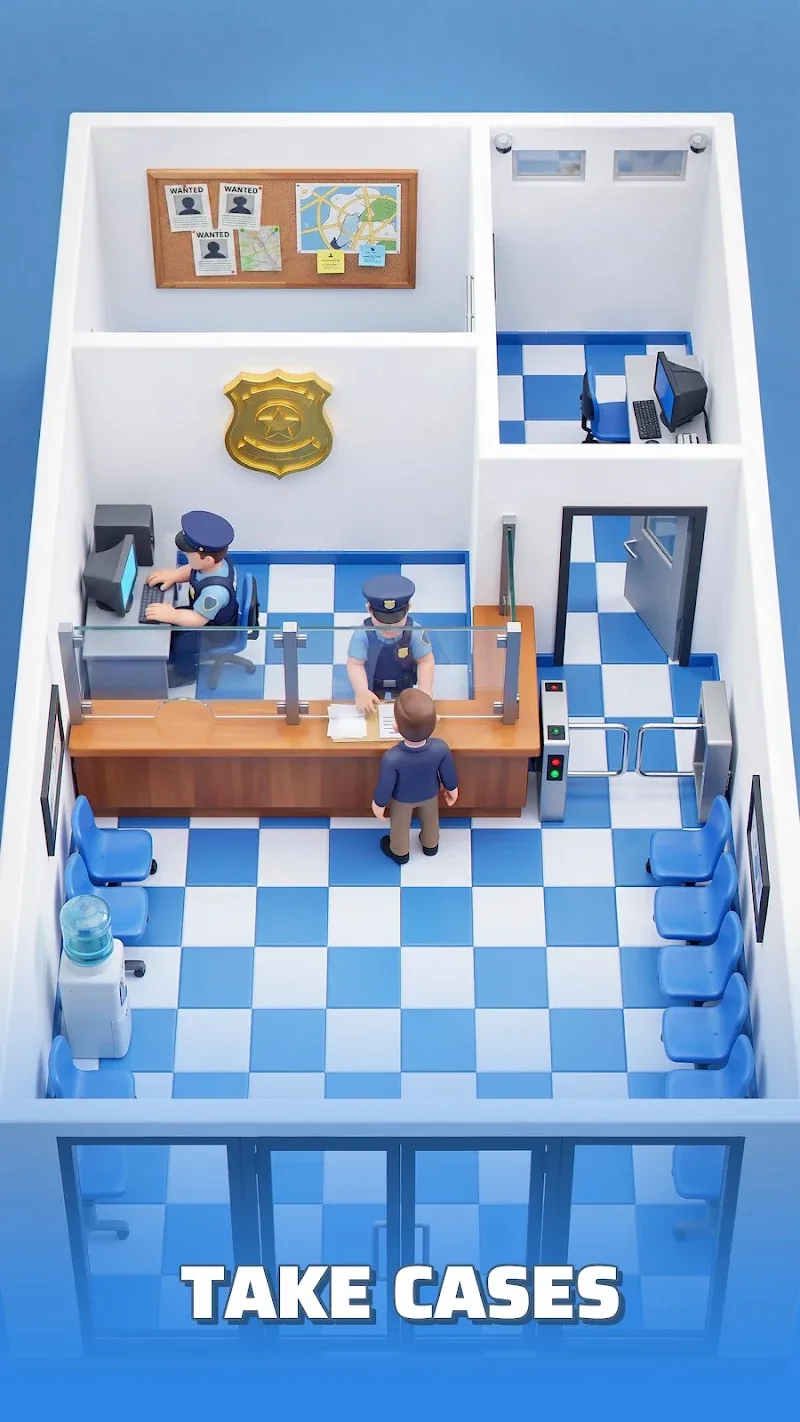
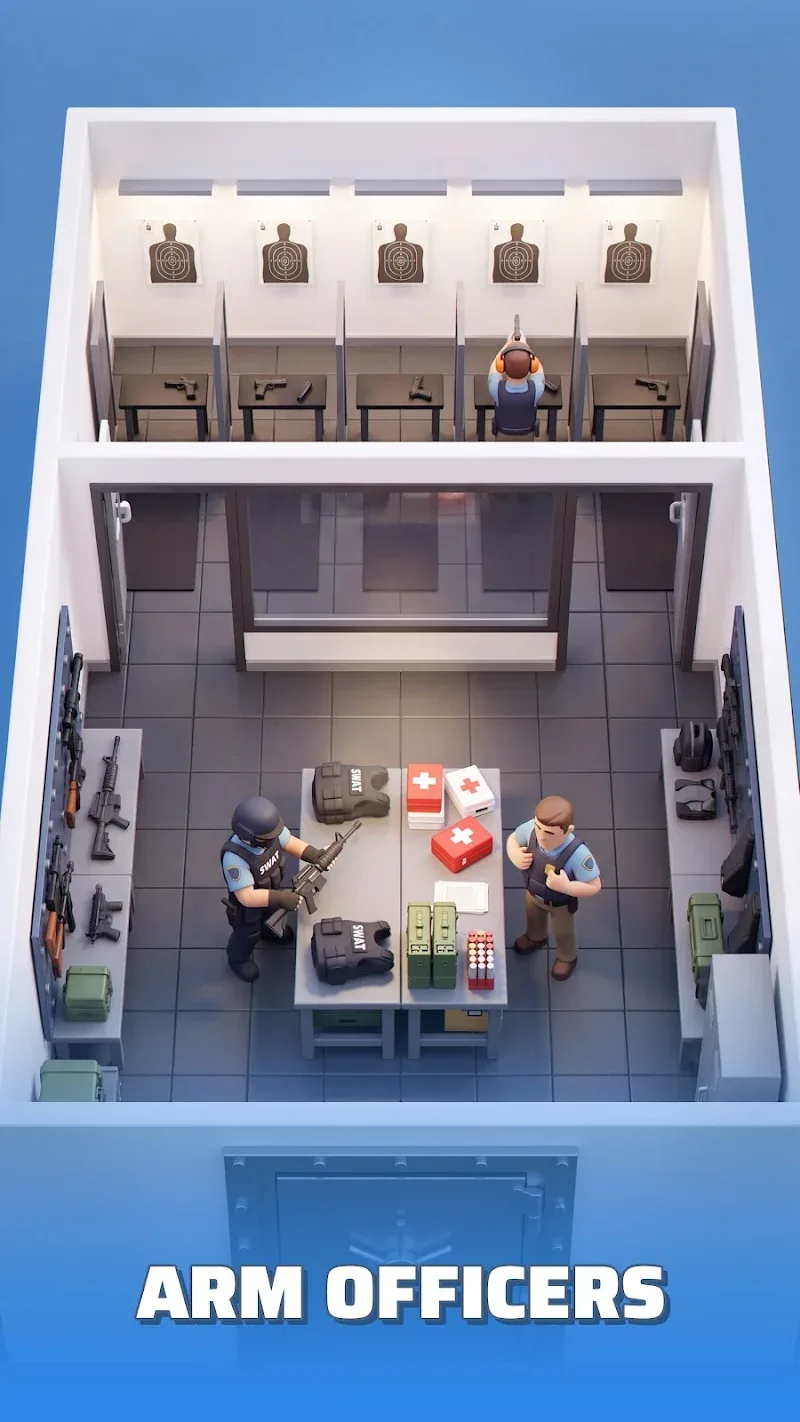
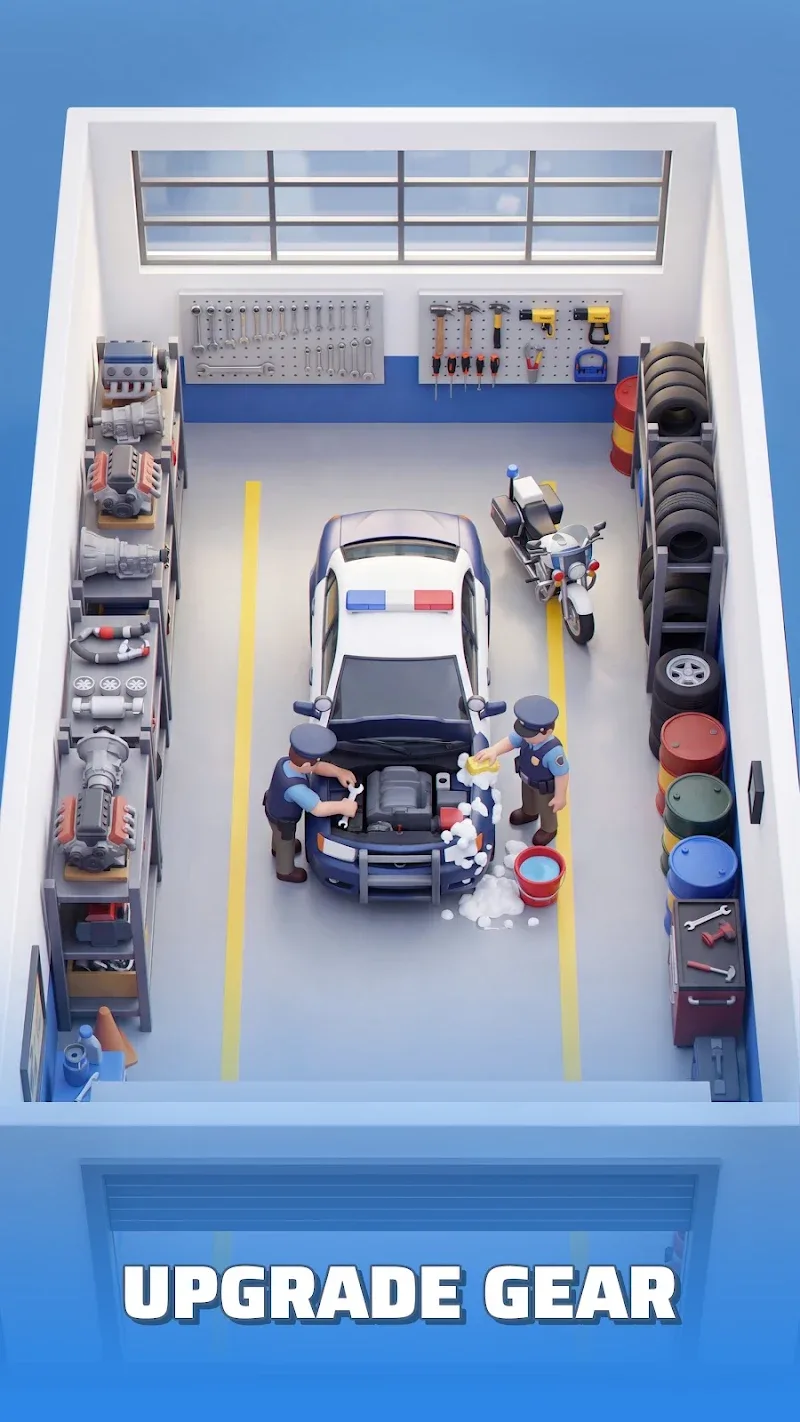
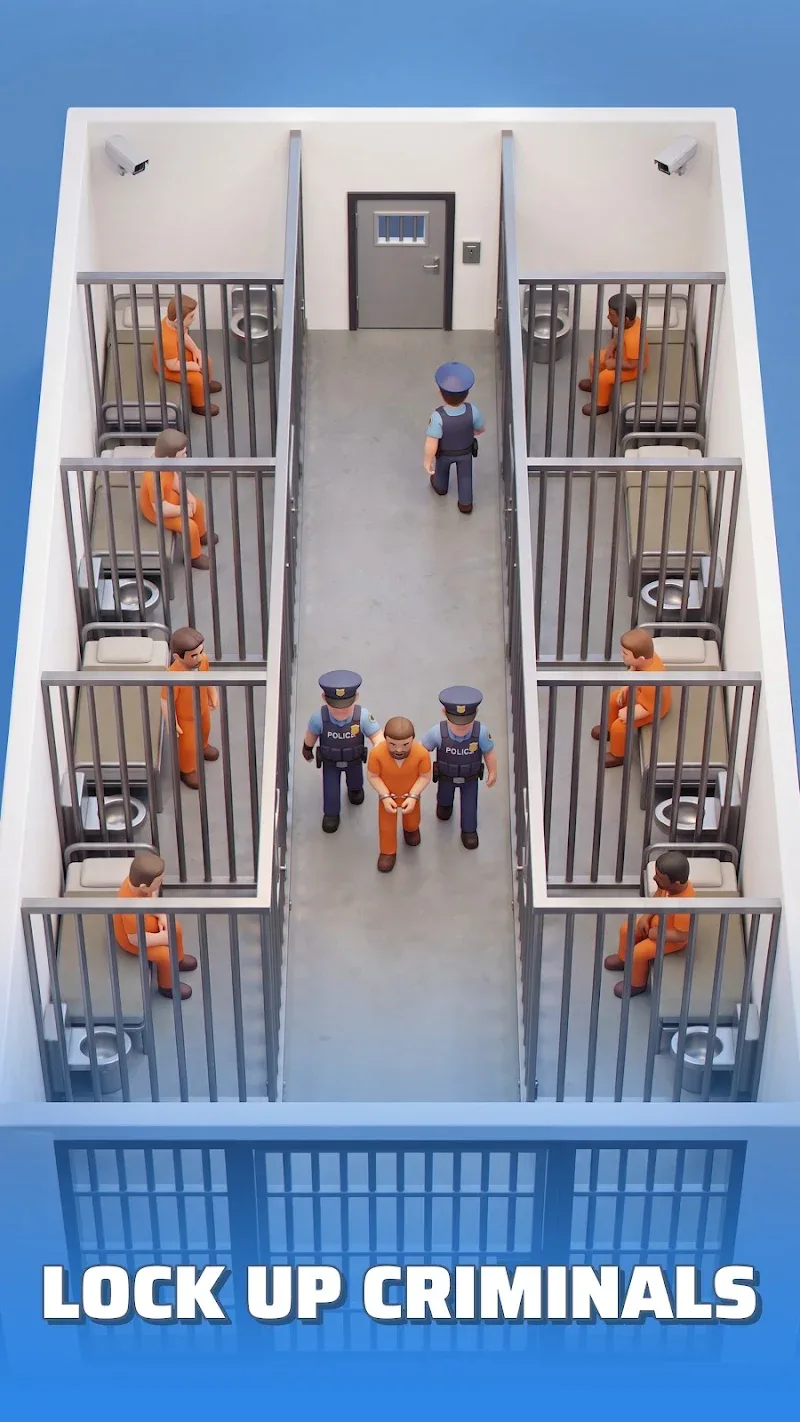
Police Chief is a strategy game about turning a small precinct into a larger law-enforcement headquarters. You arrange rooms, recruit officers, equip a response team, and take on cases as the station expands. The pressure isn’t simply how big you can build: investigations, detention, and security all need attention, and a busy jail can create its own emergencies.
Give the Precinct Room to Operate
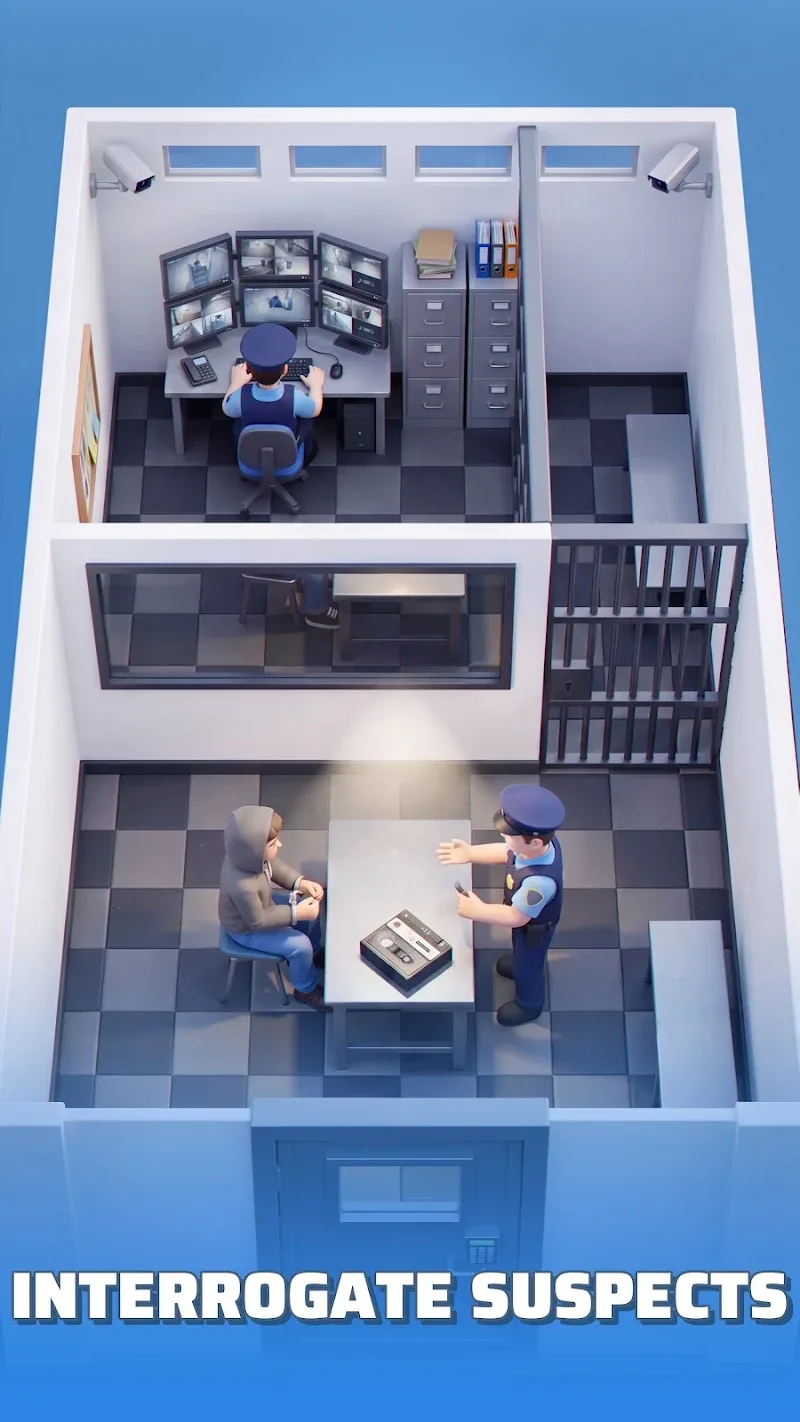
Expansion starts inside the station. You can arrange facilities including interrogation rooms, holding cells, and armories, then establish departments as your operation grows. Each addition has a different job. An interrogation room supports casework, while cells and patrols become important once suspects are in custody. Planning the headquarters means thinking about what the team must handle next, not just filling available space.
Recruiting officers is another part of that preparation. Better gear and vehicles help the team face more demanding threats, and the game also features specialized heroes in guard, biker, and marksman categories. There’s a reason to invest in the people responding to a case as well as the building they work from. A larger headquarters won’t solve a difficult incident on its own.
The game’s framing is deliberately dramatic, with gangs, smuggling operations, and criminal syndicates driving the workload. That gives the steady office expansion a purpose: each new department or piece of equipment is meant to help the precinct handle tougher cases.
Choose How to Handle Cases
Investigations aren’t presented as a single automatic step. The game describes interrogation choices, including intimidation and incentives, and asks you to adapt your approach to suspects. As cases become more complex, you can deploy SWAT teams against dangerous criminals. The shift from an interview room to a tactical response gives casework a broader scope than routine paperwork.
Those choices sit alongside the budget and reputation you manage while expanding. Spending resources on equipment may prepare officers for tougher assignments, but the station still has cells to run and security to maintain. Police Chief is built around keeping those responsibilities moving together rather than treating every case as an isolated mission.
Keep Detention From Becoming the Next Crisis
Arresting suspects adds another management job. Inmates can bring in funding, but they must be classified by risk, housed appropriately, and watched by patrols to reduce the chance of escapes. Growing the caseload without keeping up with detention gives the precinct a problem of its own making.
Riots are the sharper version of that problem. Poor meals, cramped cells, and weak surveillance can lead to unrest, calling for a rapid-response team in riot gear. A poorly managed jail can damage both reputation and funding, so extra capacity and oversight aren’t just background upgrades.
If you enjoy managing a growing base under several competing demands, the appeal here is the connection between them. The next arrest may advance a case, but it also puts another person in your care. Building a stronger police headquarters means making room for both sides of that decision.










Comments (0)
No comments yet. Be the first!