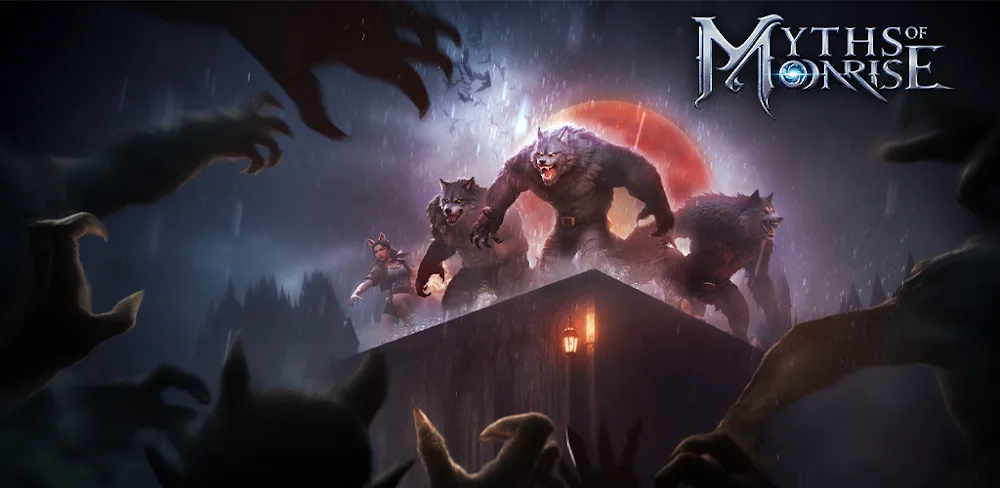


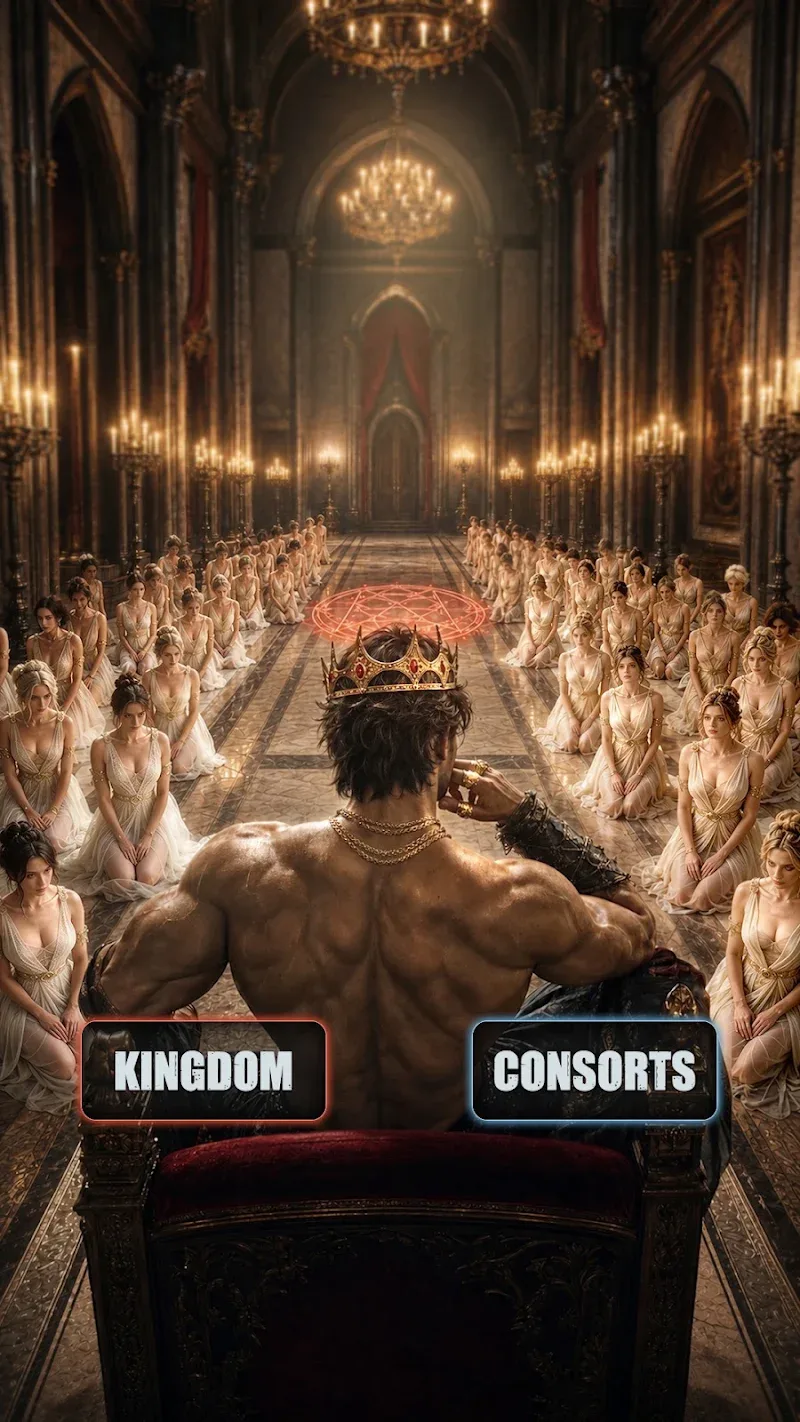
Myths of Moonrise is a dark-fantasy strategy RPG that combines match-three battles, settlement rebuilding, hero collection, and large-scale alliance warfare. A meteor catastrophe has devastated the continent, forcing vampires, werewolves, wizards, and other supernatural factions to unite against creatures known as the Fallen. You awaken as their Lord and begin turning ruined ancestral ground into a functioning stronghold.
Match Tiles to Clear the Ruins
The opening campaign ties restoration to puzzle combat. Clearing damaged areas can uncover survivors, enemies, and space for new buildings, while battles take place on a colored tile board. Match at least three pieces and the heroes aligned beneath those columns attack targets in front of them. Longer combinations and cascades build energy, eventually letting each hero trigger a special skill.
Team composition matters because the five supernatural races also operate as color-coded combat types. Werewolves, wizards, and vampires form one advantage cycle, while demon hunters and demons counter each other. A strong hero can still perform poorly against an unfavorable type, so changing the lineup is often more useful than repeating the same board with additional power.
Heroes do more than appear in puzzle stages. They lead troops on the world map and provide bonuses suited to fighting, gathering, or particular military units. Recruiting and improving a varied roster therefore supports both halves of the game: the direct decisions made on the puzzle board and the largely automated marches happening outside the settlement.
Your Sanctum Feeds a Larger War
Rebuilding gradually opens production structures, troop facilities, and other services. Resources gathered inside the sanctum or collected from the world map pay for construction, research, and military growth. Since new buildings are tied to story progress, early play moves regularly between clearing a puzzle encounter and returning home to start another upgrade.
Beyond the campaign, armies can gather materials, attack neutral enemies, and fight other players. Four troop types add another layer to formation planning. The world map isn’t merely decoration around the match-three levels; it is where preparation, timers, territorial pressure, and resource management become central.
Alliances are especially important once the map opens up. Members can support one another, organize rallies, pursue shared rewards, and compete for territory. The social layer also means progress is affected by the strength and activity of other players, not only by how efficiently you solve individual puzzles.
A Long-Term Game With Competitive Spending
Myths of Moonrise is free to start but includes purchases for in-game items. Player accounts differ on how necessary spending feels, yet many agree that paying can accelerate development and create a noticeable advantage in competitive play. Joining an active alliance, collecting resources consistently, and using protection carefully can matter as much as building a good puzzle team.
This hybrid works best for someone who wants an ongoing strategy routine rather than a self-contained match-three campaign. There are heroes to strengthen, buildings to schedule, troops to train, and alliance events to coordinate. The gothic cast gives the familiar kingdom-building structure a distinct identity, but the real commitment lies in keeping several connected progression systems moving at once.












Comments (0)
No comments yet. Be the first!