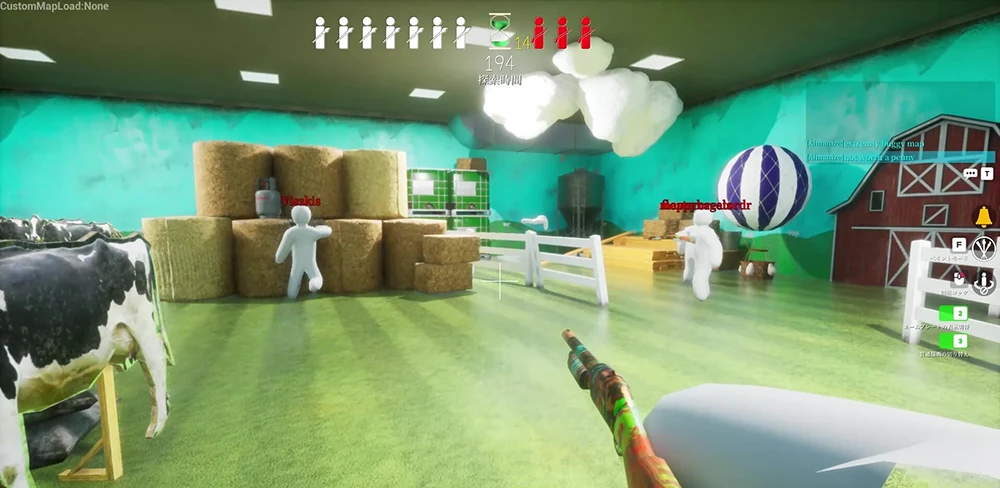

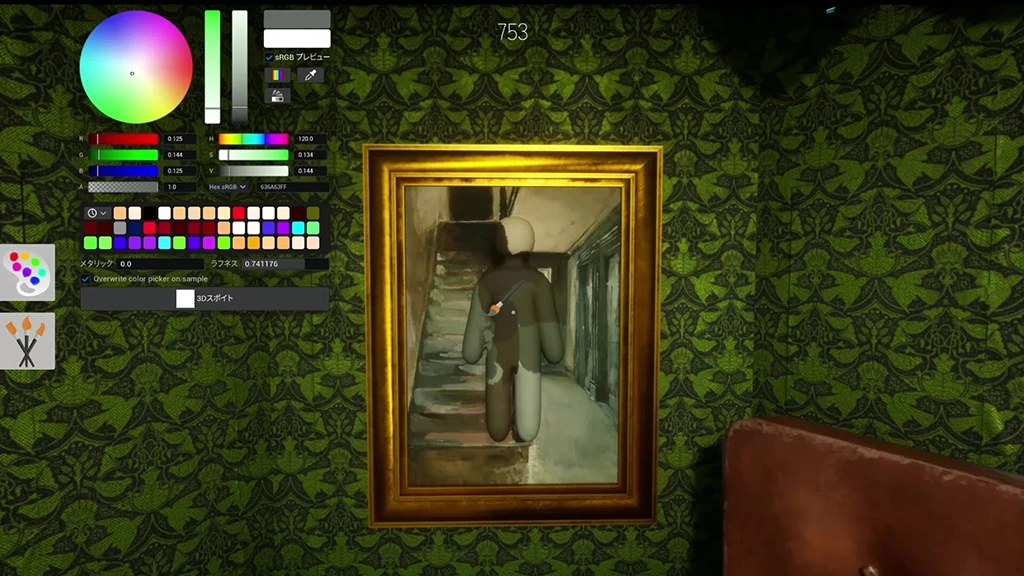
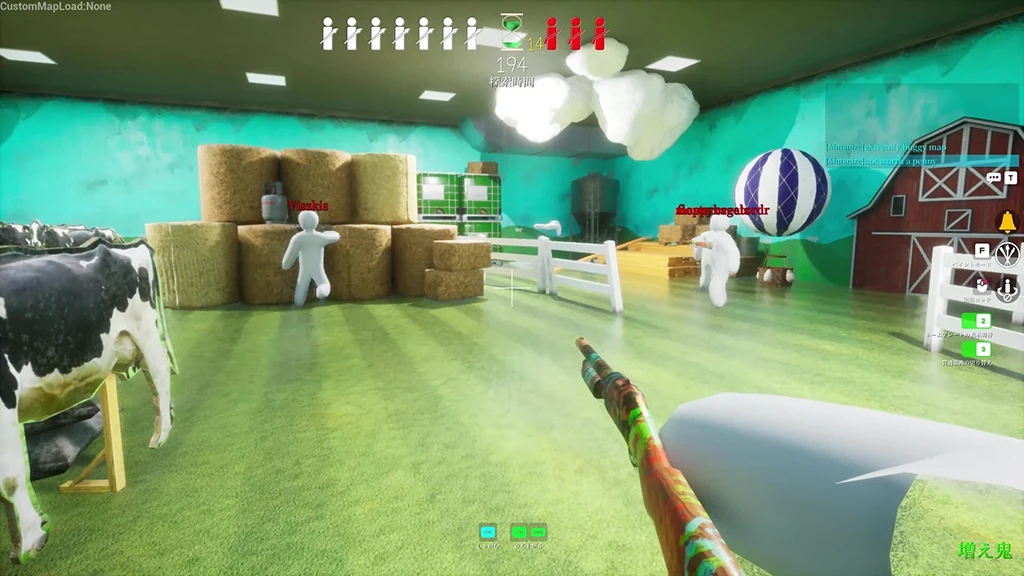
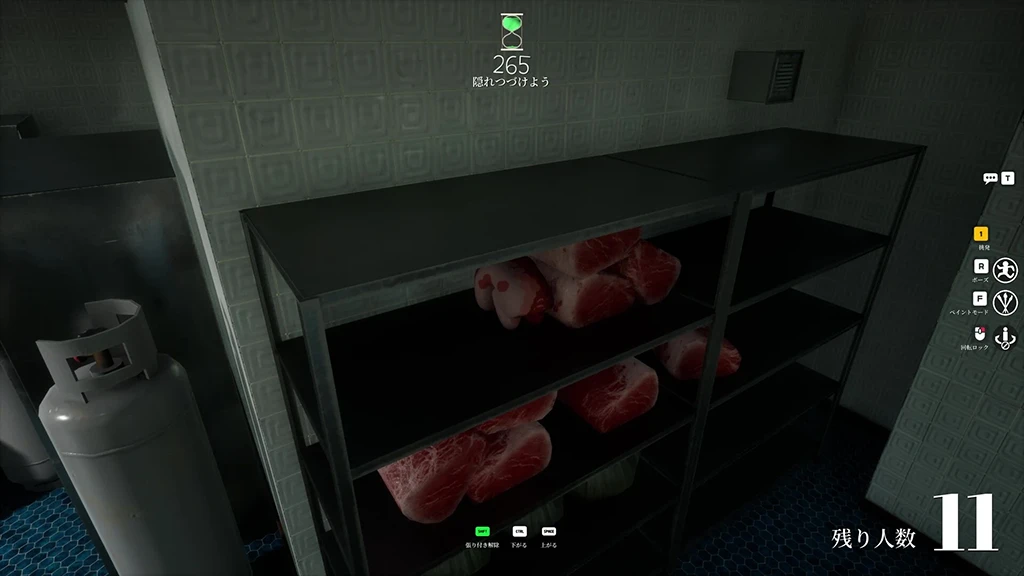
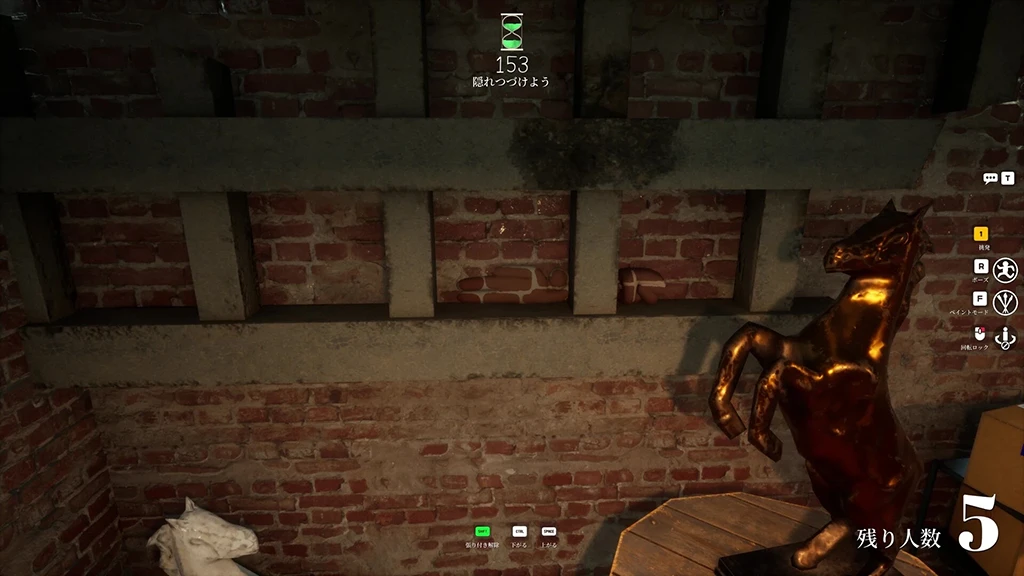
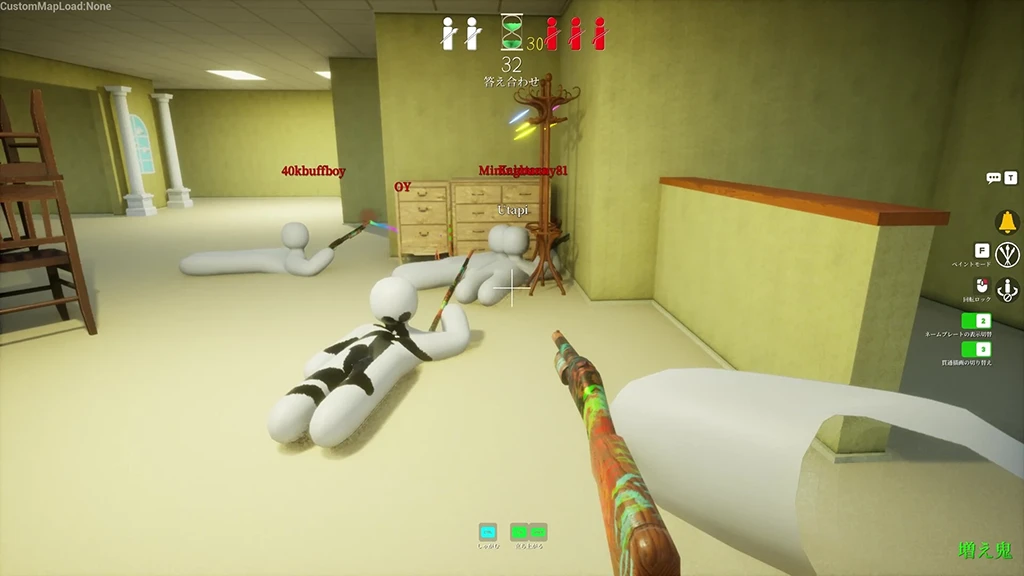
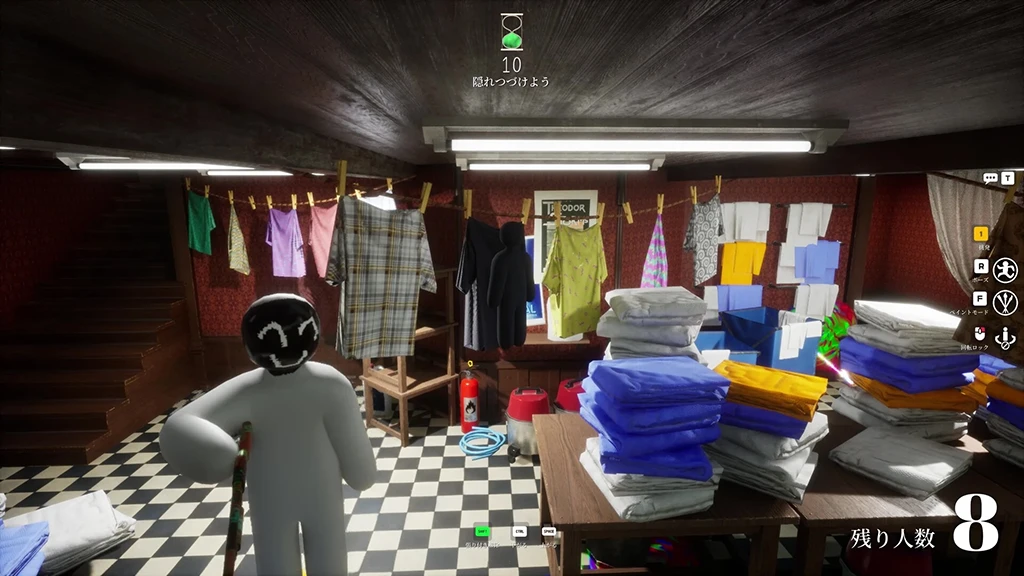
MECCHA CHAMELEON is presented as a camouflage-themed hide-and-seek game in which players paint a white character to match the surrounding stage. Hiders try to disappear against walls, objects, and patterns, while seekers search for anything that looks out of place before time expires. However, the Android app linked here has a significant identity problem: it isn’t published by the developer of the original PC game, and its listing contains several contradictory details.
Painting Is Supposed to Replace the Hiding Spot
The advertised idea starts with a blank character and a nearby surface. Instead of stepping behind a crate, a hider chooses a position and paints the body to imitate the background. Matching one flat color may work in a simple corner, but brickwork, signs, and decorated walls demand lines or patches that continue the surrounding pattern.
Pose matters alongside color. A carefully painted character can still stand out if its silhouette doesn’t belong in the scene. The original concept therefore rewards three connected choices: finding a useful location, arranging the character into a believable shape, and reproducing enough visual detail to mislead a moving opponent.
Seekers face the reverse challenge. They patrol the stage and look for broken patterns, strange shadows, or shapes that don’t quite fit. The rules described on the Android page divide players into seeker and hider teams, with the seekers winning when everyone is found within the time limit.
The Store Description and App Metadata Disagree
The same page claims that players can join friends or strangers through public and private servers, recommending matches for two to ten participants. Yet its category metadata labels the Android release as single-player and offline. It is also classified under simulation, management, and farming, none of which matches the copied multiplayer hide-and-seek description.
Those conflicts make it impossible to confirm that the installed app delivers the advertised online game. The package ID also has no clear relationship to the title, and the listed publisher is Game Sonic. By contrast, the established PC release is developed and published by lemorion_1224. A shared name and description aren’t enough to prove that two products come from the same creator.
Recent user reports on the Android listing add further uncertainty, describing a different in-app title, heavy advertising, and difficulty reaching the promised gameplay. Individual reviews don’t establish exactly what every installation contains, but they reinforce the mismatch already visible in the official metadata.
Check the Publisher Before Installing
This Android release contains ads and in-app purchases. Its data disclosure says some information may be shared with third parties, including location and app activity, while transmitted data is not encrypted. These declarations deserve attention when the product’s identity is already unclear.
The paint-and-hide concept itself is easy to understand and unusually creative: copy the scenery, hold a convincing pose, and hope a seeker walks past. The linked app shouldn’t automatically be treated as the original game on mobile, though. Before installing or purchasing anything, compare the developer name, package ID, gameplay footage, and current reviews. Here, those checks reveal enough contradictions to justify caution.










Comments (0)
No comments yet. Be the first!