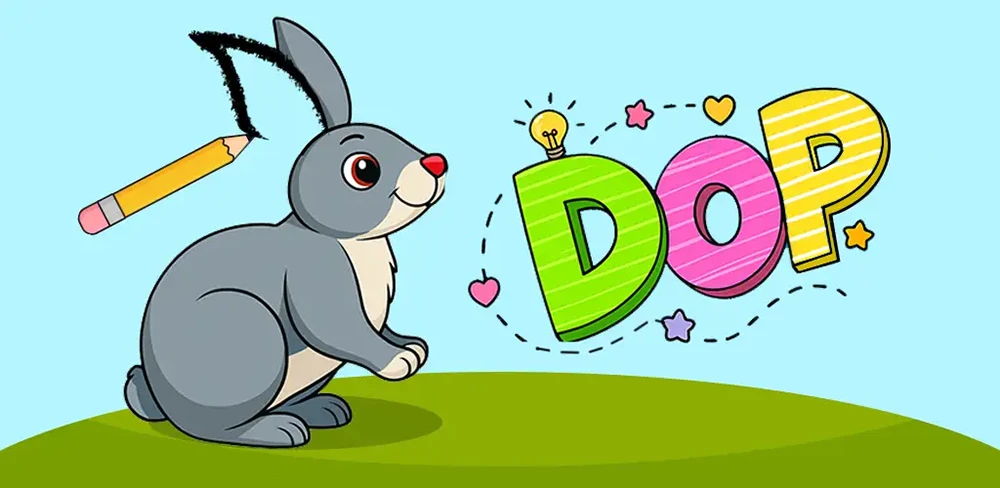
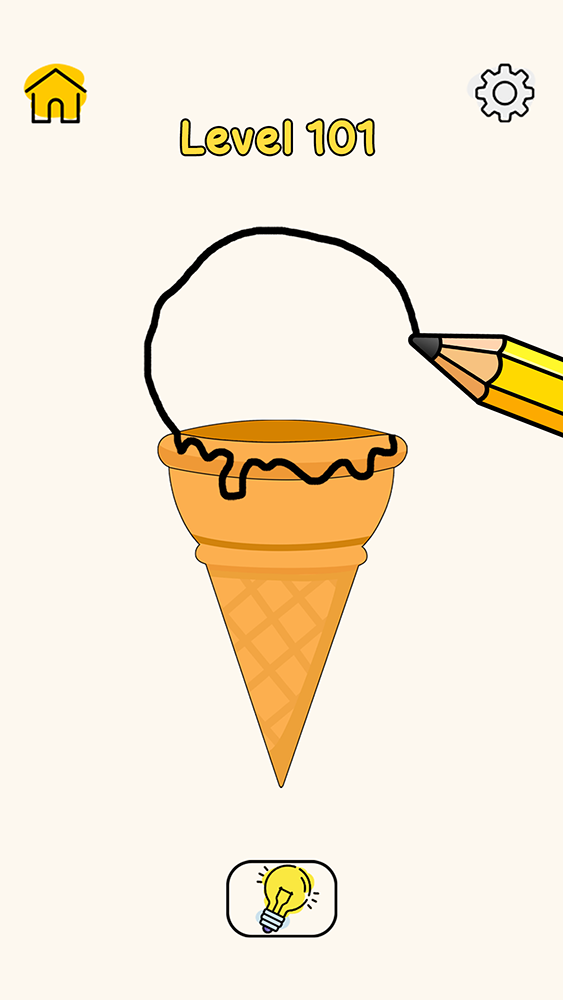
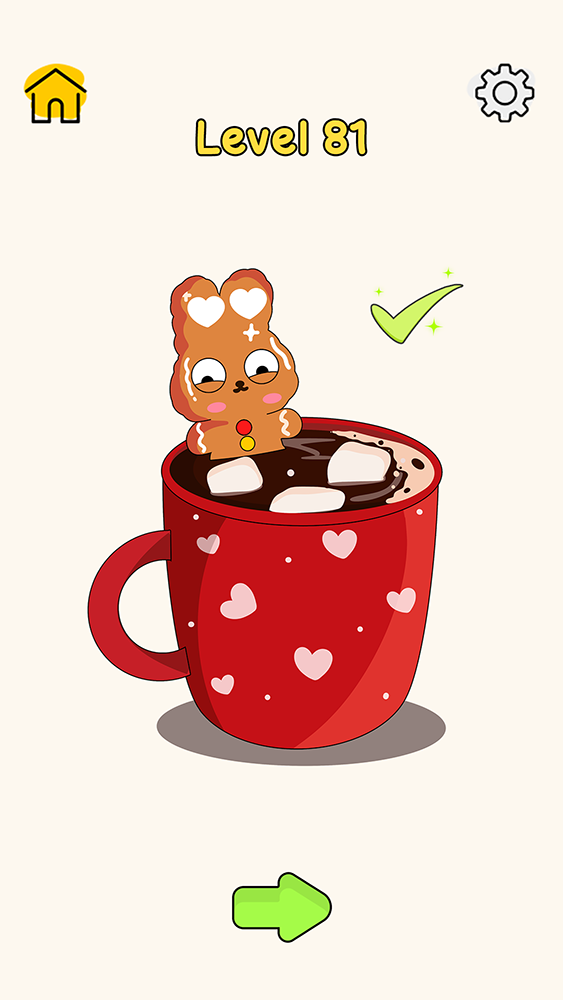
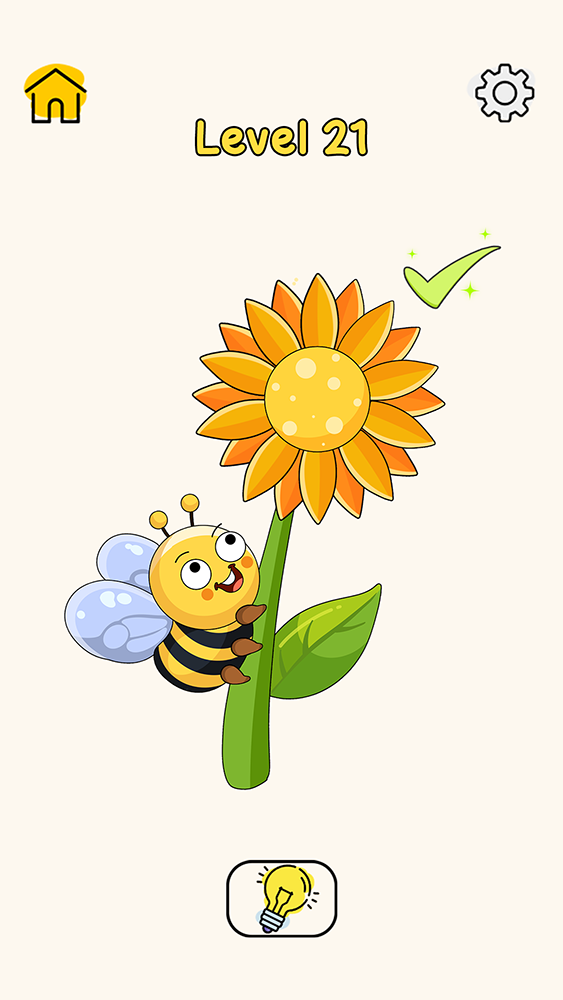
Draw One Puzzle: Brain Games turns small cartoon scenes into visual riddles solved with a finger. A picture appears incomplete, misleading, or blocked by an unnecessary object, and you must decide what single change will make sense of it. Some levels ask for a missing line or shape; others use an eraser to uncover what the image is hiding. The drawing itself is simple. Understanding the joke or problem is where the puzzle lives.
Study the Scene Before Drawing Anything
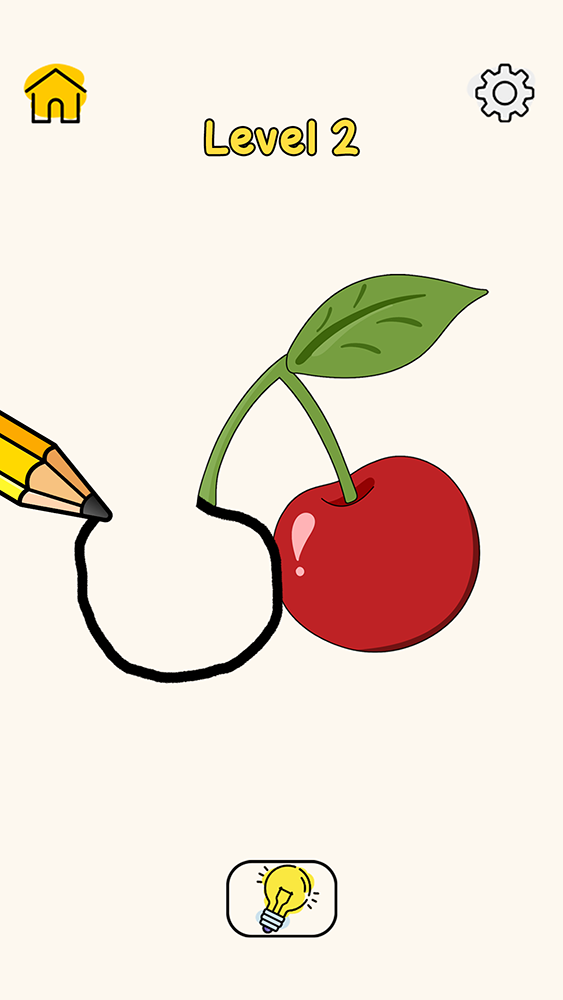
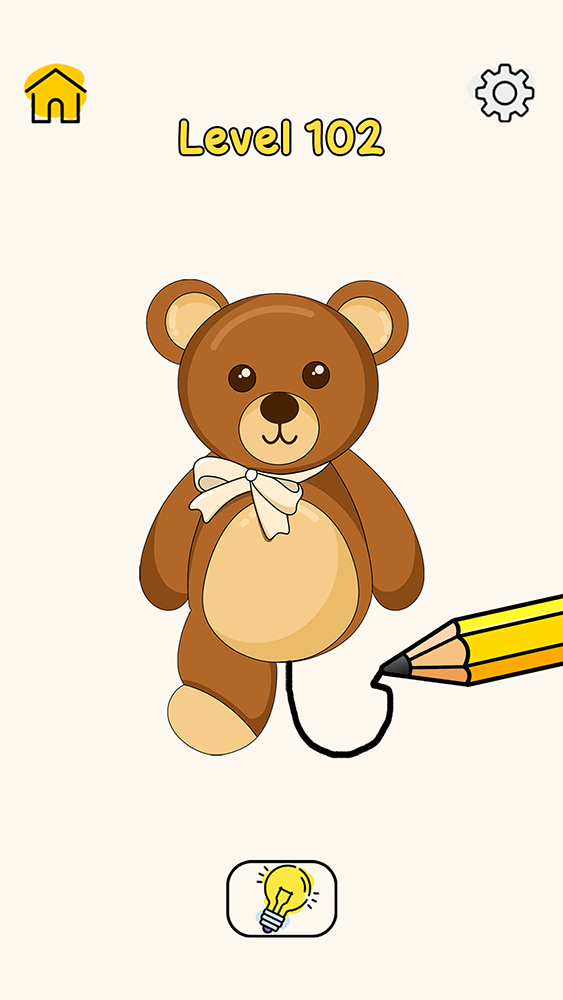
Each level begins with a compact situation rather than a written logic problem. A character may need an object, part of an item may be absent, or a detail in the picture may prevent the expected outcome. You inspect the relationships between the visible elements and then draw the part you think completes the scene.
Accurate illustration isn’t the main requirement. The game uses an intuitive recognition system and completes an accepted answer automatically, so a rough outline can be enough when the idea is correct. That keeps the focus on observation instead of artistic technique. A carefully rendered response won’t help if it solves the wrong problem.
The scenes change between levels, preventing one method from answering everything. Sometimes the obvious missing object is correct. Elsewhere, the prompt depends on noticing an unusual detail or interpreting the situation from a different angle. The strongest clues are often already present in the image; the challenge is deciding which one matters.
Drawing and Erasing Reverse the Same Question
The erase puzzles ask you to remove the right portion of an illustration and expose a hidden object, answer, or visual surprise. Instead of asking what should be added, they ask what doesn’t belong. This small reversal changes how you scan the picture. Empty space and covered areas become just as important as the visible characters.
Switching between addition and removal provides useful variety without changing the basic one-finger controls. Draw a missing component in one round, erase an obstruction in the next, and watch the scene respond when the game recognizes the intended solution. The immediate transformation keeps individual levels short and easy to fit into a spare minute.
That brevity also means the game is closer to a sequence of casual riddles than a deep drawing program. It doesn’t teach formal sketching or offer a free canvas for detailed artwork. Players come for quick answers and unexpected visual logic, not for building a reusable collection of drawings.
Short Offline Puzzles With a Commercial Layer
Draw One Puzzle supports offline single-player sessions. That makes the core levels suitable for travel or other times when a connection isn’t available. The Android release contains advertising and offers in-app purchases, so interruptions and optional spending remain part of the standard free-to-play package.
This is a good fit when you want puzzles with almost no setup: open a scene, spot the missing idea, and make one deliberate swipe. The solutions sometimes reward common sense and sometimes rely on a playful twist. If you prefer elaborate rules or long chains of deduction, the levels may feel light. For visual brainteasers that move quickly from one odd situation to another, the simple drawing mechanic stays out of the answer’s way.







Comments (0)
No comments yet. Be the first!